
Commercial electrical maintenance becomes increasingly improtant as your business grows, and it’s easy to focus on new equipment, expanding teams or increasing production. One thing that’s often overlooked, however, is whether your electrical infrastructure is still capable of supporting your business safely and efficiently.
Electrical systems rarely fail overnight. More often, problems develop gradually as additional equipment is added, temporary solutions become permanent, and routine maintenance is postponed.
While it’s tempting to focus on keeping operations moving, cutting corners where electrical safety is concerned can increase the risk of equipment failure, downtime and, more importantly, put people at risk.
The good news is that there are some straightforward checks every business can make to stay on top of their electrical infrastructure.
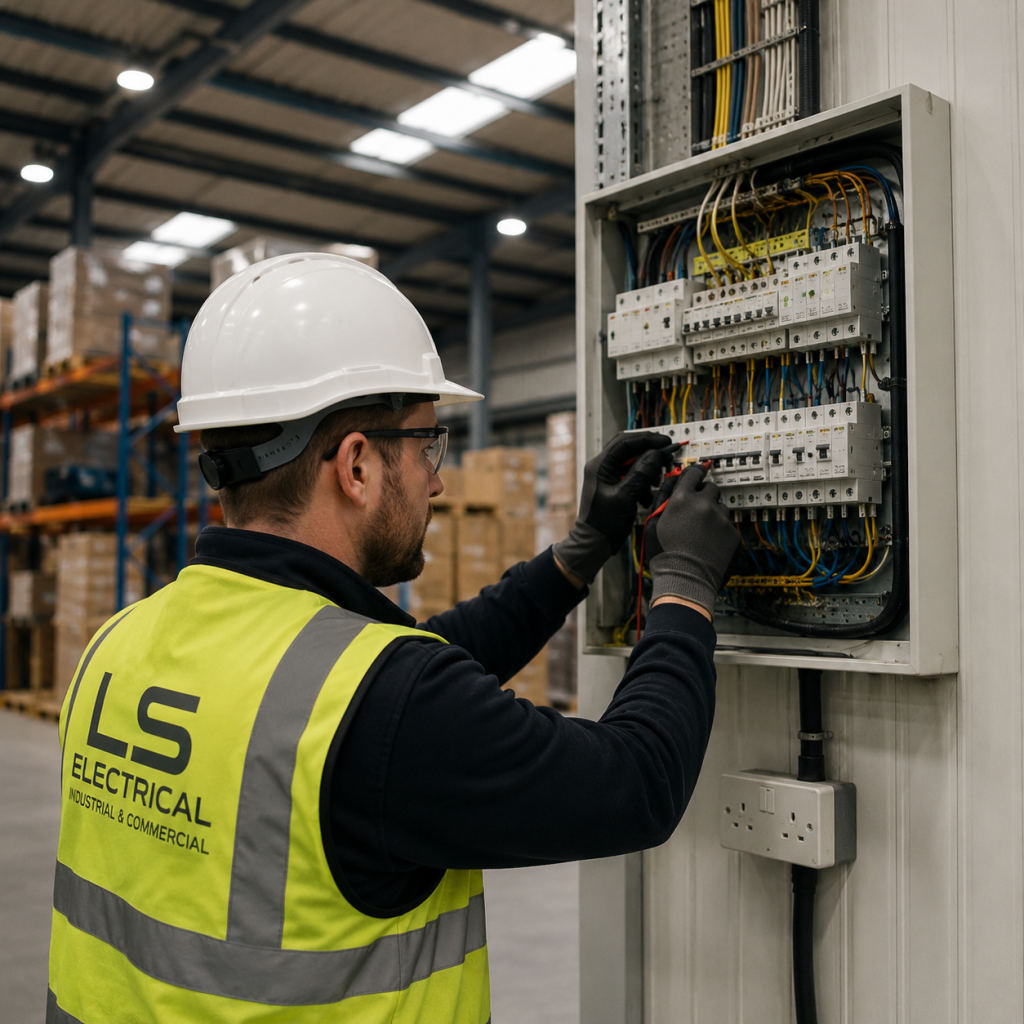
1. Has Your Business Outgrown Its Electrical Installation?
Think back to when your premises were first occupied.
Since then, have you added:
- Additional computers or servers?
- Air conditioning?
- Machinery or production equipment?
- EV chargers?
- Kitchen appliances?
- Warehouse equipment?
- New office space?
Every addition places greater demand on your electrical system. What was perfectly adequate five years ago may now be operating much closer to its limits.
If you’re responsible for maintaining commercial premises, our Commercial & Industrial Electrical Services page explains the types of electrical maintenance, inspections and upgrades businesses should consider as they grow.
2. Don’t Ignore Tripping Circuits
A circuit breaker that trips occasionally isn’t necessarily a fault.
A breaker that trips regularly is telling you something.
Repeated tripping may indicate overloaded circuits, faulty equipment or a developing electrical problem. Resetting it without investigating the cause isn’t solving the issue.
Depending on your premises, businesses may require Electrical Installation Condition Reports (EICRs), emergency lighting inspections, PAT testing or planned maintenance. You can learn more about these services on our Commercial Electricians page.
3. Avoid the “One More Extension Lead” Mentality
Extension leads are useful for temporary situations.
Unfortunately, many businesses end up relying on them permanently.
Multiple extension leads, trailing cables and overloaded adaptors can all indicate that your electrical installation no longer reflects how the building is being used.
If extension leads have become part of the furniture, it may be time to review your power distribution.
4. Commercial Electrical Maintenance: Keep Your Electrical Testing Up to Date
Electrical testing isn’t simply about complying with regulations.
Routine inspections can identify deteriorating components, damaged accessories and potential faults before they become costly failures.
Depending on your business, this may include:
- Electrical Installation Condition Reports (EICRs)
- Emergency lighting testing
- PAT Testing
- Fire alarm inspections
- Thermal inspections where appropriate
Keeping accurate records also demonstrates a proactive approach to health and safety.
5. Listen to Your Staff
Employees often notice electrical issues long before they become serious.
Pay attention to reports of:
- Flickering lights
- Warm sockets
- Buzzing switches
- Burning smells
- Frequent breaker trips
- Equipment behaving unpredictably
Small issues today can become much larger problems if left unresolved.
6. Think Beyond Compliance
Passing an inspection doesn’t necessarily mean your electrical installation is ideally suited to your business.
Ask yourself:
- Is there enough capacity for future growth?
- Are distribution boards clearly labelled?
- Could downtime be reduced with planned maintenance?
- Would improved lighting increase productivity?
- Are power supplies suitable for new equipment?
Electrical infrastructure should support your business, not limit it.
7. Plan Before Problems Occur
The best time to review your electrical installation isn’t after something fails.
Scheduling periodic reviews allows businesses to identify improvements before they affect productivity, safety or business continuity.
Whether you operate an office, warehouse, retail premises or industrial facility, staying ahead of electrical issues is usually more cost-effective than reacting to them.
Why Proactive Commercial Electrical Maintenance Saves Businesses Money
Many businesses only call an electrician when something stops working. Unfortunately, by that point the disruption has often already resulted in lost productivity, unexpected repair costs or even downtime for staff and customers.
A proactive approach to commercial electrical infrastructure helps identify small issues before they become expensive problems. Regular inspections can reveal overloaded circuits, deteriorating wiring, ageing distribution equipment or lighting systems that are consuming more energy than necessary.
For offices, warehouses, retail premises and industrial facilities, investing in preventative electrical maintenance is often significantly more cost-effective than dealing with emergency repairs or unplanned business interruptions. LS Electrical works with businesses throughout Surrey, Hampshire and Berkshire to help keep electrical systems safe, reliable and compliant.
A Proactive Approach Pays Off
Commercial electrical maintenance is something many businesses rarely think about – until it causes disruption.
By carrying out regular inspections, addressing small issues early and ensuring your electrical installation keeps pace with your business, you can reduce risk, improve reliability and help create a safer working environment for everyone.
Electrical safety isn’t about doing the minimum required to remain compliant. It’s about protecting your people, your premises and the future of your business.
What qualifications should I look for in a commercial electrician?
When choosing a commercial electrician, look for a contractor with recognised industry accreditations, appropriate insurance and experience working on commercial and industrial electrical systems. It’s also worth checking whether they are registered with a recognised Competent Person Scheme, such as NICEIC, which assesses contractors against recognised technical and safety standards. You can find out more about what NICEIC registration means on the official NICEIC website: https://www.niceic.com/.