
Blog

LS Electrical Blog

LS Electrical Blog

  • Commercial Battery Storage & BS 7671 Amendment 4: What Landlords and Facility Managers Need to Know

    Commercial Battery Storage & BS 7671 Amendment 4: What Landlords and Facility Managers Need to Know

    Commercial Battery Storage & BS 7671 – Commercial battery storage is becoming increasingly common as businesses look to store solar energy, reduce peak electricity costs and make better use of lower-cost electricity tariffs.

    This growth is reflected in the latest update to the IET Wiring Regulations (BS 7671).

    Published in April 2026, BS 7671:2018+A4:2026 – Amendment 4 to the 18th Edition Wiring Regulations introduces a new Chapter 57 covering stationary secondary batteries used for the storage and supply of electrical installations.

    For commercial landlords, facilities managers and industrial businesses, the changes are particularly relevant when planning a new battery installation, altering an existing electrical installation or undertaking electrical inspection and testing.

    Commercial Battery Storage & BS 7671 Amendment 4

    What Is Chapter 57 of BS 7671?

    Chapter 57 reflects the increasing use of battery energy storage systems within electrical installations.

    Unlike conventional electrical loads, battery systems can both receive electricity and supply it back into an installation. This means the electrical design needs to take account of bidirectional energy flow as well as the characteristics of the battery system itself.

    The new requirements address areas including:

    • battery system design and characteristics;
    • power conversion equipment;
    • bidirectional and hybrid inverters;
    • suitability of electrical protective devices;
    • battery location;
    • ventilation; and
    • fire-risk mitigation.

    For relevant requirements within BS 7671, stationary batteries covered by Chapter 57 are considered as a generating set rather than simply an electrical load.

    What Changes on 15 October 2026?

    Amendment 4 was published on 15 April 2026 and can already be used.

    There is, however, a six-month transition period.

    The previous version of BS 7671 – BS 7671:2018+A2:2022+A3:2024 – is withdrawn on 15 October 2026, after which Amendment 4 becomes the current version.

    This is particularly relevant for electrical inspection and testing. NICEIC has confirmed that Electrical Installation Condition Reports (EICRs) will need to be carried out against Amendment 4 from 15 October 2026.

    Do Existing Battery Installations Need Upgrading?

    Not automatically.

    BS 7671 is not retrospective. An electrical installation that complied with an earlier edition of the Wiring Regulations does not automatically become unsafe or require upgrading simply because a newer edition has been published.

    However, Amendment 4 becomes important when designing new installations, installing battery storage, making additions or alterations to an existing installation, or undertaking periodic inspection and testing.

    For landlords and facilities managers with an existing battery system, particularly where documentation is limited or further electrical work is planned, this may be a sensible opportunity to review the wider electrical installation.

    What Does Chapter 57 Mean for Commercial and Industrial Properties?

    Battery storage needs to be considered as part of the complete electrical installation, rather than simply as a standalone piece of equipment.

    For commercial and industrial properties, considerations may include:

    • the condition and capacity of existing distribution equipment;
    • electrical protection and isolation;
    • cable capacity and electrical loading;
    • earthing arrangements;
    • existing onsite generation such as solar PV;
    • battery location;
    • appropriate ventilation and fire-risk mitigation; and
    • how electricity will flow through the installation.

    The appropriate requirements will depend on the battery technology, manufacturer’s instructions, system design and the building in which it is being installed.

    This can be particularly important in older commercial or industrial premises where the electrical infrastructure was designed long before onsite generation and large-scale battery storage were envisaged.

    Planning Commercial Battery Storage?

    If your business is considering battery storage, assessing the existing electrical infrastructure early in the project can identify potential limitations before equipment is installed.

    For example, alterations may be required to distribution equipment, electrical protection, isolation or other parts of the installation to accommodate the proposed system.

    The same principle applies where businesses are planning several electrification projects together, such as solar PV, battery storage, workplace EV charging or additional electrical machinery.

    Considering these requirements as part of an overall electrical strategy can help avoid unnecessary alterations later.

    Combining Commercial Solar and Battery Storage

    Battery storage is increasingly installed alongside commercial solar PV.

    Electricity generated by solar panels during the day can be stored and used later, potentially increasing the amount of onsite renewable electricity a business can use itself.

    For businesses considering commercial solar panels and battery storage, our associated renewable energy company, UK Green Energy Installations (UKGEI), provides specialist commercial renewable energy design and installation across Surrey, Hampshire and Berkshire.

    Considering Commercial Solar & Battery Storage?

    Our sister renewable energy company, UK Green Energy Installations (UKGEI), designs and installs commercial solar PV and battery storage solutions for businesses across Surrey, Hampshire and Berkshire.

    Learn More About Commercial Solar & Battery Storage →

    LS Electrical can support renewable energy projects where alterations, upgrades or other work to the commercial electrical infrastructure are required.

    Commercial Electrical Inspections and Infrastructure Upgrades

    At LS Electrical, we provide commercial and industrial electrical installation, testing, maintenance and infrastructure upgrades across Surrey, Hampshire and Berkshire.

    With more than 30 years’ experience, we can assess existing commercial electrical installations and undertake electrical works required to support changing business requirements, including:

    • commercial and industrial electrical installations;
    • three-phase power and distribution;
    • electrical alterations and upgrades;
    • commercial EICRs;
    • machinery and equipment supplies; and
    • electrical infrastructure supporting renewable energy projects.

    If you’re planning battery storage, expanding an existing electrical installation or want to establish whether your current infrastructure is suitable for future projects, contact LS Electrical to discuss your requirements.

    Frequently Asked Questions

    When does BS 7671 Amendment 4 come into effect?

    BS 7671:2018+A4:2026 was published on 15 April 2026 and can already be used. The previous version of BS 7671 is withdrawn on 15 October 2026, after which Amendment 4 becomes the current version.

    Do existing commercial battery installations need to comply with Amendment 4?

    Existing installations do not automatically require upgrading simply because Amendment 4 has been introduced. BS 7671 is not retrospective. However, the current requirements become relevant when new work, additions, alterations or periodic electrical inspection and testing are undertaken.

    Does Chapter 57 apply to commercial battery storage?

    Chapter 57 covers stationary secondary battery installations where their designed purpose is the storage and supply of electrical installations. There are exclusions for certain batteries incorporated into products or systems covered by appropriate product standards.

    Further Information

    For authoritative information about Amendment 4 and the latest edition of BS 7671, visit the Institution of Engineering and Technology (IET):

    BS 7671 – 18th Edition IET Wiring Regulations

    This article provides general information about BS 7671:2018+A4:2026. Requirements vary according to the individual electrical installation, equipment and circumstances, and the information above should not be treated as a substitute for project-specific electrical design or professional advice.

  • How to Choose the Right Commercial Electrician for Your Business

    How to Choose the Right Commercial Electrician for Your Business isn’t just about finding someone who can complete the job in front of you. For most businesses, the better choice is an electrical contractor that can support the premises today and in the years ahead.

    From routine electrical maintenance and EICRs to three-phase power, machinery supplies, lighting upgrades and larger installations, having one trusted electrical company that understands your premises can make managing your electrical infrastructure considerably easier.

    So, what should you look for when choosing a commercial electrician?

    1. How Do You Choose the Right Commercial Electrician for Your Business

    Commercial electrical requirements rarely remain the same.

    You might initially need an additional circuit or distribution board alteration, but six months later require an EICR, emergency lighting work, a new three-phase supply or electrical infrastructure for new machinery.

    Look for a contractor capable of supporting a broad range of commercial and industrial electrical requirements, including:

    • Commercial electrical installations
    • Electrical alterations and upgrades
    • Commercial EICRs and fixed wire testing
    • Three-phase power
    • Distribution boards and electrical infrastructure
    • Machinery and equipment power supplies
    • LED and commercial lighting
    • Emergency lighting
    • Fault finding and repairs
    • Planned electrical maintenance
    • EV charging and renewable energy electrical infrastructure

    Choose the right commercial electrician for your business that has broad in-house capabilities can reduce the need to find a different electrician every time your requirements change.

    2. Don’t Automatically Choose a Contractor That Subcontracts Everything

    It’s worth asking who will actually be carrying out the work.

    Some businesses win a contract and then subcontract much of the electrical work to other companies.

    There are circumstances where specialist subcontractors are appropriate, but relying on multiple different contractors can mean different engineers, different working practices and less continuity. So it is worth considering how much is going to be subcontracted out when you choose the right commercial electrician for your business.

    Working directly with one commercial electrical contractor can also help control costs. Where work is routinely subcontracted, additional management, coordination or contractor margins may be built into the overall cost. A contractor with broad in-house capabilities can potentially provide a more direct and cost-effective service, while also reducing the time your own team spends coordinating multiple suppliers.

    A commercial electrician with its own experienced team can provide much greater consistency.

    You know who is coming to site – and they know you.

    3. Do Value a Contractor That Gets to Know Your Business

    There is a significant advantage to developing a long-term relationship with one electrical contractor.

    Over time, your electrician becomes familiar with your:

    • Site and electrical infrastructure
    • Distribution arrangements
    • Machinery and equipment
    • Previous installations and alterations
    • Operational requirements
    • Access procedures
    • Safety requirements
    • Key personnel
    • Production schedules and working hours

    That knowledge can become particularly valuable when something goes wrong.

    Instead of explaining your site from scratch to a new contractor, you’re dealing with a company that already understands how your business operates.

    Why Long-Term Relationships Matter

    One of the biggest advantages of working with the same commercial electrician is that they get to know your premises, your electrical infrastructure and the way your business operates.

    A good example is Camberley Signs, who have worked with LS Electrical for more than 20 years. When they invested in a new laser machine, LS Electrical was their natural choice to carry out the electrical installation.

    That continuity means less time explaining your site to new contractors, greater consistency and a trusted electrical partner that already understands your business.

    Read the Camberley Signs Case Study →

    4. Don’t Choose on Price Alone

    The cheapest quotation isn’t necessarily the best-value option.

    For commercial and industrial businesses, electrical work can affect safety, compliance, productivity and business continuity.

    Consider the wider value of the contractor, including experience, qualifications, responsiveness, quality of workmanship and their ability to support your business after the original job has been completed.

    A slightly cheaper installation can quickly become expensive if another contractor has to return later to rectify or understand it.

    5. Do Choose a Local Commercial Electrician

    Location matters more than many businesses realise.

    A commercial electrician based within your region can often provide faster and more practical ongoing support than a contractor travelling considerable distances to reach you.

    This becomes particularly important when you have:

    • An electrical fault
    • Production downtime
    • A failed circuit
    • Machinery that cannot operate
    • An urgent electrical alteration
    • An unexpected problem discovered during maintenance

    For businesses in Hampshire, Surrey and Berkshire, choosing an established local electrical contractor can provide the reassurance that help isn’t hundreds of miles away.

    6. Do Check Their Commercial AND Industrial Experience

    Domestic and commercial electrical work can be very different.

    Warehouses, factories, engineering businesses, workshops and manufacturing facilities can have considerably more complex electrical requirements than residential properties.

    If your business operates machinery or specialist equipment, look for an electrician experienced with areas such as three-phase electrical systems, industrial distribution, machinery supplies and commercial electrical infrastructure.

    7. Don’t Wait Until Something Goes Wrong

    One of the best times to choose your commercial electrician is before you urgently need one.

    Building a relationship through planned maintenance, testing and smaller electrical projects means you already have a trusted contractor to contact when an unexpected problem occurs.

    Planned commercial electrical maintenance can also help identify deterioration and potential faults before they result in disruption.

    8. Do Check Qualifications, Accreditations and Insurance

    Always check that your electrical contractor is appropriately qualified and insured for the work they undertake.

    For example, LS Electrical is an NICEIC-approved contractor, providing additional reassurance that work is carried out to recognised industry standards.

    For commercial premises, documentation, testing and certification can be every bit as important as the physical installation itself.

    9. Do Think About Your Future Requirements

    Your electrical contractor should be able to support where your business is going – not simply where it is today.

    You may be considering:

    • New machinery
    • Additional production equipment
    • Three-phase upgrades
    • Warehouse expansion
    • Office refurbishment
    • LED lighting
    • Additional power and data
    • EV charging
    • Solar panels
    • Battery storage
    • Air-conditioning electrical supplies

    Having a contractor that understands both your existing installation and your future plans can make expansion considerably easier.

    Choose the Right Commercial Electrician for Your Business – Dos & Don’ts

    ✓ DO ✕ DON’T
    Choose an electrician with broad commercial and industrial experience. Don’t assume every electrician has experience working in commercial or industrial environments.
    Look for a contractor that can provide a complete range of electrical services. Don’t use a different contractor for every electrical requirement if you can avoid it.
    Choose a local company that can provide ongoing support when you need it. Don’t overlook how important response times can be when an electrical problem affects your business.
    Check qualifications, accreditations, insurance and relevant experience. Don’t choose a commercial electrician purely on the cheapest quotation.
    Ask who will actually be carrying out the electrical work. Don’t assume the company you appoint will necessarily carry out all the work themselves.
    Build a long-term relationship with a contractor that gets to know your business and premises. Don’t wait until an electrical failure or emergency before finding a company you trust.

    One Electrical Contractor. One Point of Contact.

    For many businesses, the ideal relationship isn’t finding an electrician for a single job. It’s to choose the right commercial electrician for your business that becomes an extension of your business!

    At LS Electrical, we have supported commercial and industrial customers across Hampshire, Surrey and Berkshire for more than 30 years.

    Our aim is to provide businesses with one reliable point of contact for their electrical requirements – from everyday alterations and maintenance through to commercial testing, three-phase installations, machinery supplies and larger electrical projects.

    And because we get to know our customers, their premises and their electrical infrastructure, we’re in a much better position to support them as their businesses develop.

    Looking To Choose the Right Commercial Electrician for Your Business?

    If you’re looking for a reliable commercial electrical contractor for a one-off project or would like to establish a long-term relationship with an electrician that can support your business, contact LS Electrical to discuss your requirements.

  • The Hidden Cost of Electrical Downtime: How Preventative Electrical Maintenance Keeps Your Business Running

    The Hidden Cost of Electrical Downtime: How Preventative Electrical Maintenance Keeps Your Business Running

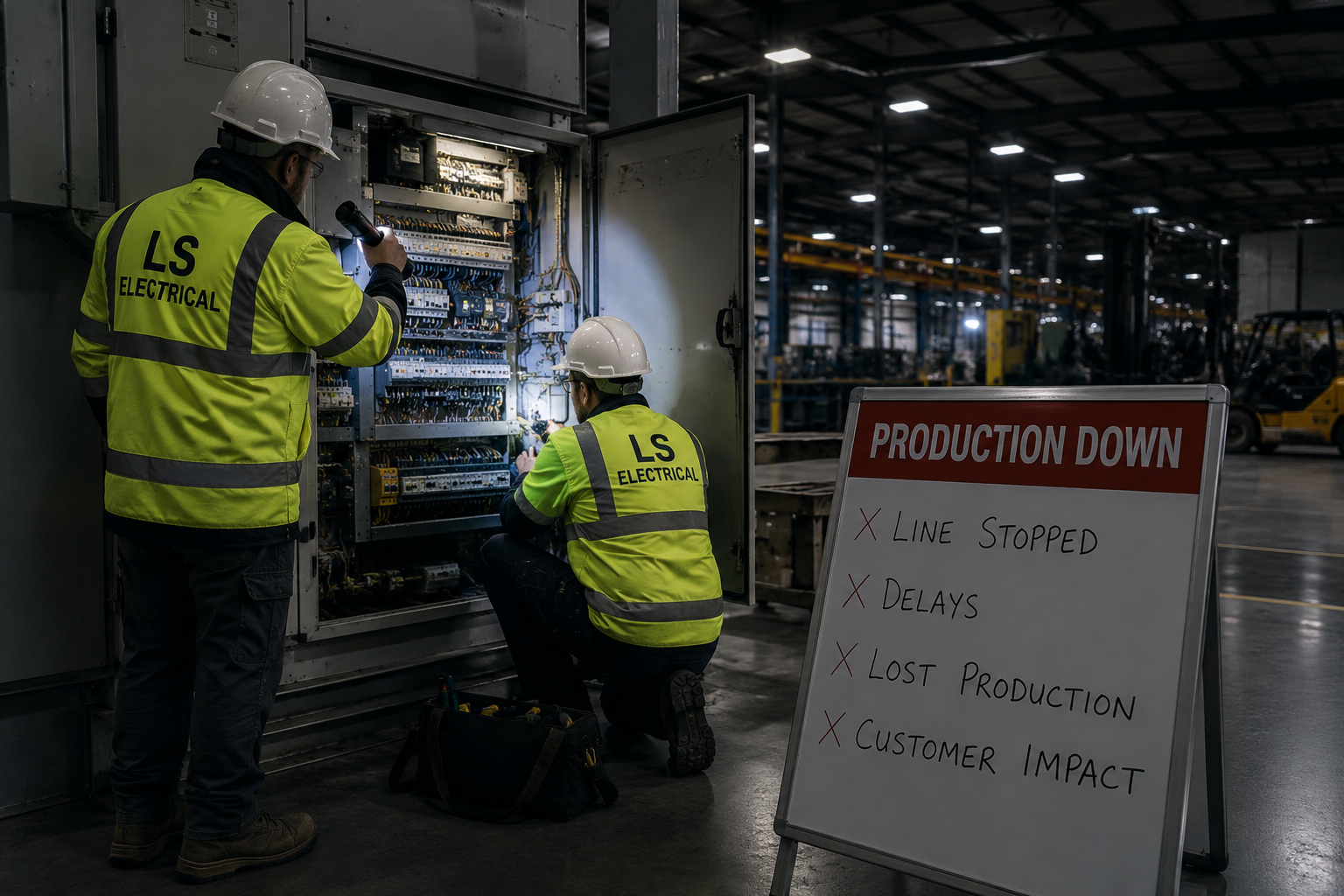
    Electrical downtime is one of the most expensive and disruptive problems a business can experience. Whether you operate a manufacturing facility, warehouse, engineering workshop, office or commercial premises, even a short loss of power can have significant financial consequences.

    The hidden cost of electrical downtime is often far greater than the cost of the electrical fault itself. For many businesses across Surrey, Hampshire and Berkshire, the true impact extends beyond the repair, with lost production, delayed deliveries, idle staff, damaged equipment and unhappy customers quickly outweighing the cost of preventative electrical maintenance.

    At LS Electrical, we help businesses reduce the risk of unexpected electrical failures through professional inspections, planned maintenance, electrical upgrades and rapid response support, helping keep your business operational and productive.

    The Hidden Cost of Electrical Downtime

    What Is Electrical Downtime?

    Electrical downtime occurs whenever part or all of your electrical system prevents normal business operations. The Hidden Cost of Electrical Downtime often extends far beyond the immediate repair, affecting productivity, delivery schedules, staff efficiency and ultimately your bottom line.

    This could include:

    • Distribution board failures
    • Three-phase power faults
    • Overloaded electrical circuits
    • Tripped protective devices
    • Equipment power failures
    • Damaged cabling
    • Failing switchgear
    • Faulty control panels
    • Emergency lighting failures
    • Unexpected power outages

    While some failures happen without warning, many develop gradually due to ageing equipment, loose electrical connections, inadequate maintenance or components approaching the end of their service life over months or even years and show early signs before becoming a major problem.

    The True Cost of Electrical Downtime

    Many businesses focus solely on the repair cost.

    In reality, the repair is often the smallest expense.

    The hidden costs can include:

    Lost Production

    For manufacturing businesses, every minute of downtime can reduce productivity and delay customer orders.

    Production schedules are disrupted, machines stand idle and operators wait while faults are investigated.

    Staff Downtime

    Employees remain on the payroll whether production is running or not.

    Electricians may only need two hours to repair a fault, but the loss of productive hours across an entire workforce can be far greater.

    Missed Customer Deadlines

    Late deliveries can damage customer relationships that have taken years to build.

    Repeated delays may result in lost contracts or financial penalties.

    Emergency Repair Costs

    Emergency call-outs often involve:

    • Out-of-hours labour
    • Temporary repairs
    • Replacement components
    • Production disruption
    • Additional contractor costs

    These costs are usually significantly higher than planned maintenance.

    Equipment Damage

    Electrical faults don’t just stop equipment.

    They can damage:

    • CNC machinery
    • Compressors
    • Production lines
    • HVAC systems
    • IT infrastructure
    • Automation equipment
    • Variable speed drives

    Protecting expensive equipment is often reason enough to invest in preventative maintenance.

    Common Causes of Electrical Downtime

    Many electrical failures share similar causes.

    Ageing Distribution Boards

    Older distribution boards may no longer provide the protection required for today’s electrical loads.

    Signs include:

    • Frequent tripping
    • Overheating
    • Corrosion
    • Limited spare capacity
    • Obsolete protective devices

    A distribution board upgrade can significantly improve both reliability and safety.

    Overloaded Circuits

    Businesses evolve.

    Additional machinery, air conditioning, EV chargers and new production equipment often increase electrical demand.

    Without reviewing the existing installation, circuits may become overloaded.

    Loose Electrical Connections

    Loose electrical connections are one of the most common causes of unexpected electrical faults and a significant contributor to The Hidden Cost of Electrical Downtime. Over time, vibration, heat and general wear can cause terminals to loosen, creating resistance that generates excessive heat.

    Regular electrical inspections can identify these issues before they develop into equipment failure, production delays or an unplanned shutdown, helping businesses avoid costly disruption and maintain operational continuity.

    Poor Preventative Maintenance

    Electrical systems require regular maintenance to remain safe, reliable and efficient. Dust, vibration, moisture and everyday use all contribute to wear over time, increasing the risk of faults and The Hidden Cost of Electrical Downtime if problems go unnoticed.

    A planned preventative electrical maintenance programme helps identify potential issues before they interrupt your business, reducing the risk of costly emergency repairs, production delays and unexpected downtime while helping maintain business continuity.

    Why Preventative Maintenance Makes Financial Sense

    The cost of planned electrical maintenance is often a fraction of the cost of an unexpected failure.

    By carrying out regular inspections, testing and servicing, businesses can:

    • Reduce unplanned downtime
    • Improve electrical safety
    • Extend the life of electrical equipment
    • Reduce emergency repair costs
    • Improve business continuity
    • Help maintain compliance with current electrical regulations

    For many businesses, preventing just one electrical failure can more than cover the cost of an annual maintenance programme.

    Power outages aren’t always caused by electrical faults.

    Grid interruptions can also bring production to a halt. For businesses where continuity is critical, battery energy storage systems can provide backup power and keep essential equipment running during an outage. Our sister company, UK Green Energy Installations, specialises in commercial battery storage solutions.

    Ready to Reduce Electrical Downtime?

    Understanding The Hidden Cost of Electrical Downtime is only the first step. The most effective way to reduce the risk of unexpected electrical failures is through a planned preventative maintenance programme.

    LS Electrical provides commercial electrical maintenance, Commercial EICRs (Fixed Wire Testing), three-phase electrical services, distribution board inspections, fault finding and preventative maintenance for businesses across Surrey, Hampshire and Berkshire.

    Frequently Asked Questions

    What is electrical downtime?

    Electrical downtime is any period when an electrical fault prevents a business from operating normally. It may be caused by power failures, distribution board faults, overloaded circuits, damaged cabling or equipment failure. The Hidden Cost of Electrical Downtime can extend beyond the repair itself to include lost production, idle staff, delayed orders and customer disruption.

    How can businesses reduce electrical downtime?

    Businesses can reduce electrical downtime through planned preventative electrical maintenance. Regular Commercial EICRs (Fixed Wire Testing), distribution board inspections, fault finding and routine servicing can identify developing problems before they cause an unexpected shutdown.

    Is preventative electrical maintenance worth the cost?

    Yes. Preventative electrical maintenance is usually far less expensive than emergency call-outs, lost production, delayed customer orders and damaged equipment. Preventing just one unexpected electrical failure may more than cover the cost of planned maintenance and significantly reduce The Hidden Cost of Electrical Downtime for your business.

    What are the warning signs of electrical problems in commercial buildings?

    Common warning signs include circuit breakers regularly tripping, flickering lighting, overheating distribution boards, burning smells, buzzing electrical equipment and machinery unexpectedly stopping. These issues should be investigated promptly by a qualified commercial electrician.

    Does LS Electrical provide commercial electrical maintenance?

    Yes. LS Electrical provides commercial and industrial electrical maintenance, Commercial EICRs (Fixed Wire Testing), three-phase electrical services, distribution board upgrades and fault finding for businesses across Surrey, Hampshire and Berkshire.

  • Single-Phase vs Three-Phase Power: What’s the Difference for UK Businesses?

    Single-Phase vs Three-Phase – if you’re planning to expand your business, install new machinery or simply wondering whether your existing electrical supply is sufficient, you’ve probably come across the terms single-phase and three-phase power.

    Understanding the difference between single-phase vs three-phase power for UK businesses can help you make informed decisions, avoid costly delays and ensure your premises are ready for future growth.

    In this guide, we’ll explain how each type of electrical supply works, which businesses typically require three-phase power and when it may be worth considering an upgrade.

    Single-Phase vs Three-Phase

    What Is Single-Phase Power?

    Single-phase electricity is the standard electrical supply found in most UK homes and many smaller commercial premises.

    It is perfectly suitable for typical electrical demands such as:

    • Offices
    • Retail shops
    • Small cafés
    • Beauty salons
    • Small workshops
    • General lighting
    • Computers and office equipment
    • Standard heating and air conditioning

    For many businesses, a single-phase supply provides more than enough capacity for day-to-day operations.

    What Is Three-Phase Power?

    Three-phase electricity uses three alternating electrical currents instead of one, allowing power to be delivered more evenly and efficiently.

    Rather than providing short bursts of power, a three-phase supply delivers a more consistent electrical load, making it ideal for equipment that requires higher power or continuous operation.

    Businesses commonly using three-phase supplies include:

    • Manufacturing facilities
    • Engineering workshops
    • Warehouses
    • Distribution centres
    • Vehicle repair garages
    • Commercial kitchens
    • Factories
    • Agricultural buildings
    • Larger office buildings

    This is why many people search for “what businesses need three-phase power in the UK” when planning expansion.

    Single-Phase vs Three-Phase Power: The Key Differences

    Single-PhaseThree-Phase
    Standard for most homesCommon in commercial and industrial premises
    Lower power capacityHigher power capacity
    Suitable for light electrical loadsSuitable for heavy machinery and equipment
    Lower installation costsDesigned for larger electrical demands
    Ideal for smaller premisesBetter for expanding businesses

    Neither system is inherently “better”- the right choice depends entirely on your business’s electrical requirements.

    How Do You Know If Your Business Needs Three-Phase Power?

    Many businesses don’t think about their electrical supply until they encounter problems.

    Some common signs include:

    • Circuit breakers regularly tripping
    • Lights dimming when machinery starts
    • Installing commercial air conditioning
    • Purchasing large machinery
    • Adding EV charging points
    • Expanding production facilities
    • Increasing electrical demand year after year

    If any of these sound familiar, you may be searching for “does my business need three-phase electricity?”– a question that’s best answered through a professional assessment of your electrical installation.

    What Equipment Typically Requires Three-Phase Power?

    Many commercial and industrial systems perform best with a three-phase supply, including:

    • CNC machinery
    • Industrial compressors
    • Vehicle lifts
    • Commercial refrigeration
    • Large HVAC systems
    • Commercial kitchen equipment
    • Industrial pumps
    • Production machinery
    • Welding equipment
    • Large extraction systems

    Manufacturers often specify whether equipment requires a three-phase electrical supply before installation.

    Can You Upgrade from Single-Phase to Three-Phase?

    Yes. Many UK businesses successfully upgrade their electrical supply as they grow.

    The process often includes:

    • Assessing your current electrical installation
    • Calculating your electrical load requirements
    • Liaising with your Distribution Network Operator (DNO), where required
    • Installing or upgrading distribution equipment
    • Testing and certification

    Every property is different, so the exact process will depend on your existing electrical infrastructure and the capacity available in your area.

    Is Three-Phase Power More Efficient?

    One of the main advantages of three-phase power is its ability to distribute electrical loads more evenly.

    This can help:

    • Improve the performance of large motors
    • Reduce voltage fluctuations
    • Support higher electrical demand
    • Allow future expansion
    • Improve reliability for commercial operations

    While it doesn’t necessarily reduce your electricity bills on its own, it provides the infrastructure needed for businesses with greater power requirements.

    Could Renewable Energy Change Your Electrical Requirements?

    As more businesses look to reduce their energy costs and carbon footprint, many are investing in commercial solar PV systems, battery storage and workplace EV charging.

    While smaller solar installations can often be connected to a single-phase supply, larger commercial solar systems are frequently installed on three-phase electrical supplies. Three-phase power can help distribute the generated electricity more evenly across your premises and is often better suited to businesses with higher energy demands.

    If you’re planning renewable energy alongside an electrical upgrade, it’s worth considering both projects together. This can simplify the design process and help ensure your electrical infrastructure is ready for future expansion.

    Related reading: Commercial Solar Panels for Businesseshttps://www.ukgei.co.uk/commercial-installation-service

    Future-Proofing Your Business

    Many businesses only upgrade their electrical supply after encountering limitations.

    However, if you’re already planning:

    • A building extension
    • New machinery
    • Additional production lines
    • Commercial EV chargers
    • Larger HVAC systems
    • Warehouse expansion

    it’s worth considering whether your existing electrical supply will continue to meet your needs over the coming years.

    Planning ahead can often reduce disruption and help avoid costly alterations later.

    Learn More About Three-Phase Power Installations

    If you’re considering a three-phase electrical installation for your business, or simply want to understand what’s involved, we’ve created a dedicated guide covering the installation process, typical applications and key considerations.

    Frequently Asked Questions FAQs

    What is the difference between single-phase and three-phase power?

    LS Electrical Ltd – Single-phase power uses one alternating current and is commonly found in homes and smaller commercial premises. Three-phase power uses three alternating currents, allowing it to deliver higher and more consistent power for commercial and industrial applications. This makes it ideal for businesses operating machinery, large HVAC systems or higher electrical loads.

    How do I know whether Single-Phase vs Three-Phase power is right for my business?

    LS Electrical Ltd – The right choice depends on your electrical demand. If your business is installing heavy machinery, expanding production, adding commercial EV chargers or regularly experiencing overloaded circuits, a three-phase electrical supply may be the most suitable option. A qualified commercial electrician can assess your current and future requirements.

    Can I upgrade from Single-Phase vs Three-Phase power?

    LS Electrical Ltd – Yes. Many commercial and industrial premises can be upgraded from a single-phase to a three-phase electrical supply. The process will depend on your existing installation and may require coordination with your local Distribution Network Operator (DNO) before the electrical work can begin.

    Is Single-Phase vs Three-Phase power only relevant for factories?

    LS Electrical Ltd – No. While factories commonly use three-phase power, it is also found in warehouses, engineering workshops, vehicle repair garages, commercial kitchens, schools, healthcare facilities and larger office buildings. Any business with higher electrical demands may benefit from a three-phase supply.

    Is Single-Phase vs Three-Phase power more expensive?

    LS Electrical Ltd – A three-phase installation may involve higher initial installation costs, particularly if your existing supply needs upgrading. However, for businesses with significant electrical demands, it provides the capacity and reliability needed to support equipment safely and efficiently, making it a worthwhile long-term investment.

  • Commercial Electrical Maintenance: 7 Ways to Stay on Top of Your Commercial Electrical Infrastructure

    Commercial electrical maintenance becomes increasingly improtant as your business grows, and it’s easy to focus on new equipment, expanding teams or increasing production. One thing that’s often overlooked, however, is whether your electrical infrastructure is still capable of supporting your business safely and efficiently.

    Electrical systems rarely fail overnight. More often, problems develop gradually as additional equipment is added, temporary solutions become permanent, and routine maintenance is postponed.

    While it’s tempting to focus on keeping operations moving, cutting corners where electrical safety is concerned can increase the risk of equipment failure, downtime and, more importantly, put people at risk.

    The good news is that there are some straightforward checks every business can make to stay on top of their electrical infrastructure.

    Commercial Electrical Maintenance

    1. Has Your Business Outgrown Its Electrical Installation?

    Think back to when your premises were first occupied.

    Since then, have you added:

    • Additional computers or servers?
    • Air conditioning?
    • Machinery or production equipment?
    • EV chargers?
    • Kitchen appliances?
    • Warehouse equipment?
    • New office space?

    Every addition places greater demand on your electrical system. What was perfectly adequate five years ago may now be operating much closer to its limits.

    If you’re responsible for maintaining commercial premises, our Commercial & Industrial Electrical Services page explains the types of electrical maintenance, inspections and upgrades businesses should consider as they grow.

    2. Don’t Ignore Tripping Circuits

    A circuit breaker that trips occasionally isn’t necessarily a fault.

    A breaker that trips regularly is telling you something.

    Repeated tripping may indicate overloaded circuits, faulty equipment or a developing electrical problem. Resetting it without investigating the cause isn’t solving the issue.

    Depending on your premises, businesses may require Electrical Installation Condition Reports (EICRs), emergency lighting inspections, PAT testing or planned maintenance. You can learn more about these services on our Commercial Electricians page.

    3. Avoid the “One More Extension Lead” Mentality

    Extension leads are useful for temporary situations.

    Unfortunately, many businesses end up relying on them permanently.

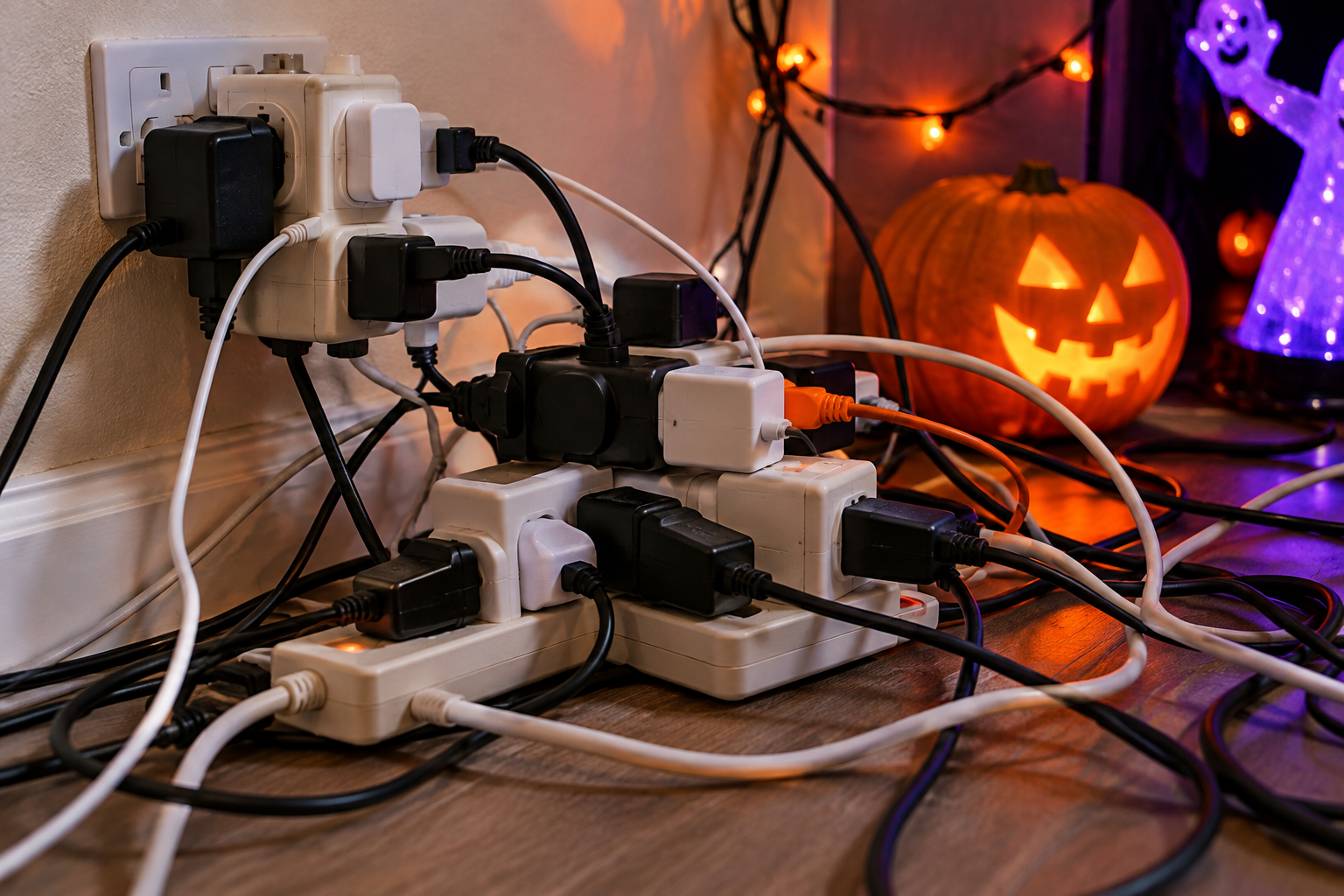
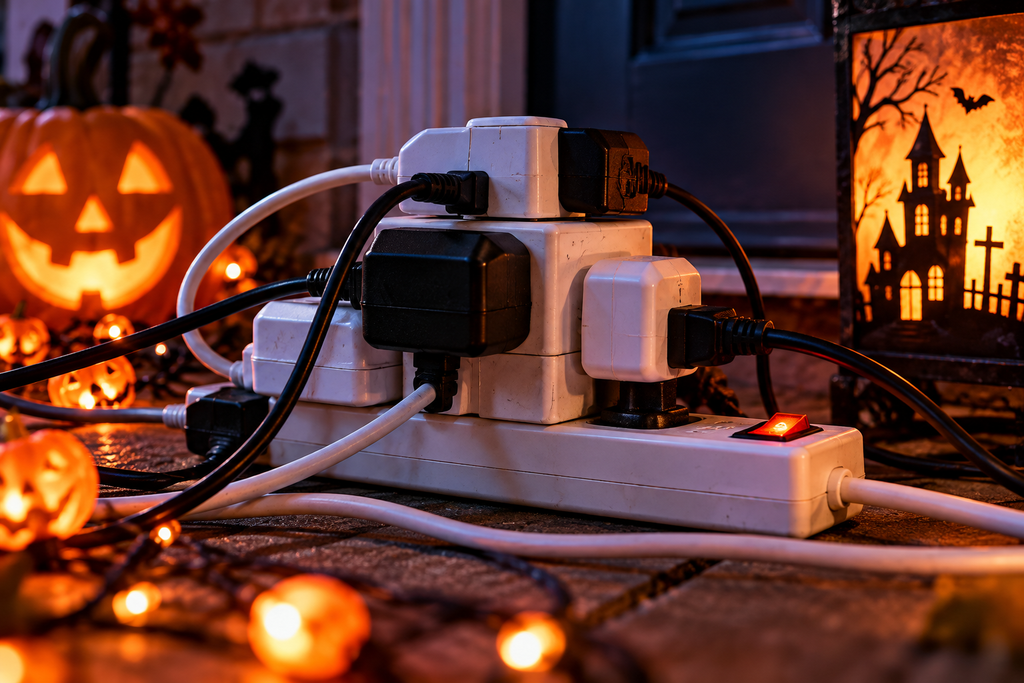
    Multiple extension leads, trailing cables and overloaded adaptors can all indicate that your electrical installation no longer reflects how the building is being used.

    If extension leads have become part of the furniture, it may be time to review your power distribution.

    4. Commercial Electrical Maintenance: Keep Your Electrical Testing Up to Date

    Electrical testing isn’t simply about complying with regulations.

    Routine inspections can identify deteriorating components, damaged accessories and potential faults before they become costly failures.

    Depending on your business, this may include:

    • Electrical Installation Condition Reports (EICRs)
    • Emergency lighting testing
    • PAT Testing
    • Fire alarm inspections
    • Thermal inspections where appropriate

    Keeping accurate records also demonstrates a proactive approach to health and safety.

    5. Listen to Your Staff

    Employees often notice electrical issues long before they become serious.

    Pay attention to reports of:

    • Flickering lights
    • Warm sockets
    • Buzzing switches
    • Burning smells
    • Frequent breaker trips
    • Equipment behaving unpredictably

    Small issues today can become much larger problems if left unresolved.

    6. Think Beyond Compliance

    Passing an inspection doesn’t necessarily mean your electrical installation is ideally suited to your business.

    Ask yourself:

    • Is there enough capacity for future growth?
    • Are distribution boards clearly labelled?
    • Could downtime be reduced with planned maintenance?
    • Would improved lighting increase productivity?
    • Are power supplies suitable for new equipment?

    Electrical infrastructure should support your business, not limit it.

    7. Plan Before Problems Occur

    The best time to review your electrical installation isn’t after something fails.

    Scheduling periodic reviews allows businesses to identify improvements before they affect productivity, safety or business continuity.

    Whether you operate an office, warehouse, retail premises or industrial facility, staying ahead of electrical issues is usually more cost-effective than reacting to them.

    Why Proactive Commercial Electrical Maintenance Saves Businesses Money

    Many businesses only call an electrician when something stops working. Unfortunately, by that point the disruption has often already resulted in lost productivity, unexpected repair costs or even downtime for staff and customers.

    A proactive approach to commercial electrical infrastructure helps identify small issues before they become expensive problems. Regular inspections can reveal overloaded circuits, deteriorating wiring, ageing distribution equipment or lighting systems that are consuming more energy than necessary.

    For offices, warehouses, retail premises and industrial facilities, investing in preventative electrical maintenance is often significantly more cost-effective than dealing with emergency repairs or unplanned business interruptions. LS Electrical works with businesses throughout Surrey, Hampshire and Berkshire to help keep electrical systems safe, reliable and compliant.

    A Proactive Approach Pays Off

    Commercial electrical maintenance is something many businesses rarely think about – until it causes disruption.

    By carrying out regular inspections, addressing small issues early and ensuring your electrical installation keeps pace with your business, you can reduce risk, improve reliability and help create a safer working environment for everyone.

    Electrical safety isn’t about doing the minimum required to remain compliant. It’s about protecting your people, your premises and the future of your business.

    What qualifications should I look for in a commercial electrician?

    When choosing a commercial electrician, look for a contractor with recognised industry accreditations, appropriate insurance and experience working on commercial and industrial electrical systems. It’s also worth checking whether they are registered with a recognised Competent Person Scheme, such as NICEIC, which assesses contractors against recognised technical and safety standards. You can find out more about what NICEIC registration means on the official NICEIC website: https://www.niceic.com/.

  • LS Electrical Ltd Transitions to the New MCS Redeveloped Installer Scheme

    At LS Electrical Ltd, maintaining the highest standards of quality, compliance, and customer service has always been at the heart of what we do. As part of our commitment to delivering trusted renewable energy solutions, we are pleased to confirm our transition to the new MCS Redeveloped Installer Scheme.

    The updated scheme represents an important evolution of the Microgeneration Certification Scheme (MCS), helping to raise standards across the renewable energy sector while providing greater confidence for customers investing in low-carbon technologies.

    LS Electrical Ltd

    What Is the MCS Redeveloped Installer Scheme?

    The MCS Redeveloped Installer Scheme has been introduced to modernise the certification process and place a greater emphasis on installation quality, consumer protection, and continuous improvement.

    The scheme is designed to:

    • Focus on the quality and performance of installations.
    • Strengthen consumer protection measures.
    • Improve accountability throughout the installation process.
    • Support ongoing professional development and best practice.
    • Create greater confidence in renewable energy installations.

    These changes help ensure certified businesses continue to deliver high standards while adapting to the rapidly growing demand for renewable energy technologies.

    What This Means for Our Customers

    As an MCS-certified business, LS Electrical Ltd continues to demonstrate its commitment to delivering renewable energy installations in accordance with recognised industry standards.

    For our customers, this means:

    Quality Assurance

    Every installation is completed under a framework designed to ensure systems are installed safely, professionally, and to the highest standards.

    Consumer Confidence

    The MCS scheme provides additional reassurance that installations are carried out by a certified business operating within a recognised quality management system.

    Ongoing Compliance

    The redeveloped scheme promotes continuous improvement, helping certified installers maintain high levels of technical competence and customer service.

    Supporting Renewable Energy Through UK Green Energy Installations

    LS Electrical Ltd delivers renewable energy projects through its dedicated renewable energy division, UK Green Energy Installations (UKGEI).

    While customers may engage with UKGEI for solar PV, battery storage, EV charging and other renewable technologies, the MCS certification is held by LS Electrical Ltd, ensuring all qualifying installations are delivered under an MCS-certified business.

    This structure allows us to combine the specialist renewable energy expertise of UKGEI with the established compliance, technical capability, and quality assurance systems of LS Electrical Ltd.

    Looking Ahead

    The renewable energy industry continues to grow at an unprecedented pace, and the MCS Redeveloped Installer Scheme represents an important step in ensuring quality remains at the forefront of the sector.

    At LS Electrical Ltd, we welcome these changes and remain committed to providing customers with trusted renewable energy solutions that meet the highest industry standards.

    To learn more about our renewable energy services, visit UK Green Energy Installations, our dedicated renewable energy brand, or contact our team to discuss your project.

    What does the MCS Redeveloped Installer Scheme mean for customers?

    LS Electrical Ltd has successfully transitioned to the MCS Redeveloped Installer Scheme, demonstrating our continued commitment to delivering high-quality renewable energy installations. For customers, the redeveloped scheme places even greater emphasis on installation quality, consumer protection and consistent standards, giving added confidence when choosing an MCS-certified installer.

    Why is MCS certification important when choosing a solar or battery installer?

    LS Electrical Ltd believes MCS certification is one of the most important accreditations homeowners should look for when investing in solar panels, battery storage or other renewable technologies. MCS certification helps demonstrate that installations are completed to recognised industry standards and is often required to access certain schemes and benefits associated with renewable energy systems.

    Where can I find more information about the redeveloped MCS Installer Scheme?

    LS Electrical Ltd recommends visiting the official MCS website for the latest information about the redeveloped installer scheme, including how the new framework works and what it means for installers and consumers. You can find the official guidance here: https://mcscertified.com/installers/redeveloped-installer-scheme/.

  • 5 Common Electrical Problems That Cost Businesses Money

    Electrical systems are the backbone of modern businesses. From powering equipment and machinery to supporting lighting, security systems, and IT infrastructure, reliable electrical installations are essential for day-to-day operations.

    Unfortunately, many businesses overlook electrical issues until they cause disruption, downtime, or expensive repairs. Understanding the 5 Common Electrical Problems That Cost Businesses Money can help business owners identify risks early and avoid unnecessary costs. Identifying problems early can help reduce costs, improve safety, and keep your business running smoothly.

    Why Businesses Should Understand These Issues

    The 5 Common Electrical Problems That Cost Businesses Money are often preventable with regular inspections, maintenance, and professional electrical support. Identifying these issues early can reduce downtime, improve workplace safety, and protect your bottom line.

    Here are five common electrical problems that could be costing your business money.

    5 Common Electrical Problems That Cost Businesses Money

    1. Frequent Power Trips and Circuit Overloads

    Regularly tripping circuits are often a sign that your electrical system is struggling to cope with demand. As businesses grow, additional equipment, machinery, computers, and appliances can place increased pressure on existing circuits.

    Common causes include:

    • Overloaded circuits
    • Faulty equipment
    • Damaged wiring
    • Ageing electrical installations

    Frequent power interruptions can lead to lost productivity, damaged equipment, and unnecessary downtime. A professional electrical inspection can identify the cause and recommend appropriate solutions.

    2. Inefficient Lighting Systems

    Many commercial premises continue to rely on outdated lighting systems that consume more energy than necessary.

    Older fluorescent and halogen lighting can result in:

    • Higher electricity bills
    • Increased maintenance costs
    • Poor workplace lighting conditions
    • Reduced energy efficiency

    Upgrading to modern LED lighting can significantly reduce energy consumption while improving visibility and creating a more comfortable working environment.

    3. Hidden Electrical Faults

    Electrical faults are not always immediately obvious. Loose connections, damaged cables, deteriorating components, and ageing distribution boards can remain undetected for years.

    If left unresolved, hidden faults can lead to:

    • Unexpected breakdowns
    • Costly emergency repairs
    • Fire risks
    • Business disruption

    Regular inspections and testing help identify potential issues before they develop into expensive problems.

    4. Outdated Electrical Infrastructure

    Many commercial and industrial properties were designed to meet the electrical demands of previous decades.

    Modern businesses often require:

    • Additional power supplies
    • Increased data infrastructure
    • EV charging facilities
    • Advanced security systems
    • Energy-efficient equipment

    Outdated electrical systems may struggle to support these requirements safely and efficiently. Investing in electrical upgrades can improve reliability, support future growth, and reduce ongoing maintenance costs.

    5. Lack of Planned Electrical Maintenance

    One of the most expensive mistakes businesses make is waiting for something to go wrong before calling an electrician.

    Reactive maintenance often results in:

    • Emergency call-out costs
    • Operational downtime
    • Unexpected repair bills
    • Disruption to staff and customers

    Planned electrical maintenance allows businesses to identify issues early, schedule repairs at convenient times, and minimise disruption to operations.

    Why Professional Commercial Electrical Services Matter

    Commercial electrical systems are often far more complex than domestic installations and require specialist expertise.

    Working with experienced commercial electricians can help businesses:

    • Improve electrical safety
    • Reduce downtime
    • Increase energy efficiency
    • Maintain reliable operations
    • Extend the lifespan of electrical equipment

    At LS Electrical, our Commercial & Industrial Electricians provide electrical inspections, testing, maintenance, installations, upgrades, and fault-finding services for businesses across Surrey, Hampshire, and Berkshire.

    Learn more about our Commercial & Industrial Electrical Services

    How to Avoid the 5 Common Electrical Problems That Cost Businesses Money

    The good news is that the 5 Common Electrical Problems That Cost Businesses Money can often be prevented through planned maintenance, regular inspections, and timely upgrades. Working with experienced commercial electricians helps businesses identify potential issues before they become costly disruptions

    Protect Your Business from Costly Electrical Problems

    Now that you understand the 5 Common Electrical Problems That Cost Businesses Money, it’s easier to spot warning signs before they impact productivity, safety, and operating costs.

    Electrical issues can have a significant impact on productivity, operating costs, and workplace safety. By addressing problems early and investing in regular maintenance, businesses can avoid unnecessary expenses and keep their operations running efficiently.

    Whether you manage an office, warehouse, retail unit, manufacturing facility, or industrial site, professional electrical support can help ensure your systems remain safe, reliable, and fit for purpose.

    Why Businesses Choose LS Electrical

    With over 30 years of industry experience, LS Electrical has built a reputation for delivering reliable, high-quality electrical services to commercial and industrial clients. As NICEIC-approved contractors, we provide professional electrical installations, maintenance, testing, and fault-finding services that meet the latest industry standards.

    From office refurbishments and retail fit-outs to warehouse power installations and industrial electrical systems, our experienced team supports businesses of all sizes with safe, efficient, and compliant electrical solutions. Learn more about our company, experience, and commitment to quality on our About Us page.

    As businesses continue to focus on sustainability and reducing energy costs, we can also connect clients with renewable energy solutions through our sister company, UK Green Energy Installations, specialists in commercial solar PV systems, battery storage, EV charging infrastructure, and energy-efficient technologies designed to help businesses reduce their carbon footprint and long-term operating costs.

    Proudly serving businesses across Surrey, Hampshire, and Berkshire.

  • Do I Need an EICR for My Home? 7 Signs Your Property Needs an Electrical Safety Check

    Do I Need an EICR for My Home? It’s a question many homeowners ask, particularly when buying a property, planning renovations, or experiencing electrical issues. An Electrical Installation Condition Report (EICR) helps identify potential hazards and ensures your home’s electrical installation remains safe and compliant.

    If you’re wondering whether your home needs an electrical safety check, here are seven signs that it may be time to arrange an EICR.

    Do I Need an EICR for My Home

    What Is an EICR?

    Many homeowners ask, “Do I Need an EICR for My Home?” particularly when buying an older property or planning electrical upgrades.

    An Electrical Installation Condition Report (EICR) is a comprehensive inspection and test of your property’s fixed electrical installation. During the inspection, a qualified electrician assesses the condition of wiring, sockets, switches, consumer units, and other electrical components to ensure they meet current safety standards.

    The report highlights any defects, deterioration, or potential hazards and recommends any necessary remedial work.

    1. Your Property Is More Than 10 Years Old

    If you’re wondering, “Do I Need an EICR for My Home?”, the age of your property is often one of the biggest factors to consider.

    If your home hasn’t had an electrical inspection within the last 10 years, it’s worth arranging an EICR. Electrical standards have changed significantly over the years, and older properties may not meet current regulations.

    Many homeowners are surprised to discover outdated wiring, insufficient circuit protection, or ageing consumer units that could affect safety.

    2. You Still Have an Old Fuse Box

    Homeowners with older fuse boards frequently ask, “Do I Need an EICR for My Home?” as outdated electrical systems may not meet current safety standards.Traditional fuse boxes are far less effective than modern consumer units fitted with Residual Current Devices (RCDs).

    If your property still has:

    • Rewireable fuses
    • An old-style fuse board
    • No RCD protection

    an electrical inspection can determine whether an upgrade is required to improve safety and compliance.

    3. Your Lights Flicker or Frequently Trip

    Occasional flickering lights may seem harmless, but recurring electrical issues can indicate underlying faults such as:

    • Loose connections
    • Overloaded circuits
    • Faulty wiring
    • Deteriorating electrical components

    An EICR can help identify the root cause before it develops into a more serious problem.

    4. You’ve Recently Purchased a Property

    Buying a home is one of the biggest investments you’ll ever make. While surveys assess the structure of a property, they often don’t provide a detailed assessment of the electrical installation.

    Arranging an EICR after moving into a new home can provide peace of mind and help you understand whether any upgrades or repairs are needed.

    5. You’re Planning Renovations or Extensions

    Adding a new kitchen, home office, extension, EV charger, or garden building can place additional demand on your electrical system.

    Before starting major works, an EICR can determine whether your existing installation is capable of safely supporting the additional load.

    6. You Notice Burning Smells or Discoloured Sockets

    Electrical burning smells, scorch marks, buzzing sounds, or discoloured sockets should never be ignored.

    These warning signs may indicate:

    • Overheating wiring
    • Loose electrical connections
    • Damaged accessories
    • Circuit overloads

    If you notice any of these issues, contact a qualified electrician immediately.

    7. You’re Unsure of the Condition of Your Electrical Installation

    Many homeowners simply don’t know when their property was last inspected. If you have no record of previous testing or electrical upgrades, arranging an EICR is a sensible way to establish the condition of your installation.

    If you have no record of previous testing or electrical upgrades, arranging an EICR is a sensible way to establish the condition of your installation. A professional inspection can identify issues before they lead to unexpected breakdowns, costly repairs, or safety concerns. Our Domestic Electricians provide professional electrical inspections, testing and remedial work for homeowners across Surrey, Hampshire and Berkshire.

    How Often Should a Home Have an EICR?

    One of the most common questions we hear is, “Do I Need an EICR for My Home if everything seems to be working normally?” The answer is yes, because many electrical faults remain hidden until they are discovered during professional testing.

    As a general guide, homeowners should consider an EICR every 10 years or when buying a property. However, more frequent inspections may be recommended for older properties or homes with significant electrical alterations.

    A qualified electrician can advise on the most appropriate inspection interval for your property.

    So, do I need an EICR for my home?

    If your property is more than 10 years old, you’ve recently purchased it, or you’re unsure when it was last inspected, arranging an EICR is a sensible step towards protecting your home and family.

    Regular electrical inspections can help identify hidden faults and improve household safety. See electrical safety guidance.

    Why Choose LS Electrical?

    At LS Electrical, we provide professional electrical inspections, testing, installations, and repairs for homeowners across Surrey, Hampshire, and Berkshire.

    Our experienced team can carry out thorough EICRs, explain any findings clearly, and provide practical recommendations to keep your home safe and compliant.

    Learn more about our Domestic Electrical Services here:
    https://www.lselectrical.co.uk/trusted-domestic-electricians/

    Book Your Electrical Safety Check Today

    If you’re concerned about the condition of your home’s electrical installation or it’s been several years since your last inspection, an EICR can provide valuable peace of mind.

    Contact LS Electrical today to arrange a professional electrical safety check and ensure your home’s electrical system remains safe, reliable, and fit for modern living.

  • Domestic Electricians Near Me: Reliable Electrical Services in Surrey, Hampshire & Berkshire

    Introduction:

    Domestic Electricians Near Me. When you need a trusted domestic electrician near you, LS Electrical is here to help. Serving homeowners across Surrey, Hampshire, and Berkshire, we provide fast, professional, and safe electrical services for all your domestic needs. Whether it’s an emergency repair, home upgrade, or routine maintenance, our team is ready to deliver high-quality results.

    Domestic Electricians Near Me

    Our Domestic Electrical Services:

    • Emergency Call-Outs: Power cuts, tripped circuits, or faulty wiring can disrupt your home. Our electricians respond quickly to get your home back up and running.
    • Lighting Installation: From indoor LED upgrades to outdoor security lighting, we design and install lighting solutions that suit your home.
    • Socket & Switch Replacement: Keep your home modern, functional, and safe with upgraded sockets and switches.
    • Electrical Inspections & PAT Testing: Ensure your home is safe and compliant with professional inspections and portable appliance testing.
    • Home Upgrades: Fuse box upgrades, smart home integration, and EV charger installation are handled safely and efficiently.

    Areas We Cover:

    We’re proud to serve homes across Surrey, Hampshire, and Berkshire, making it easy to find a domestic electrician near you. Some of the towns we cover include:

    • Surrey: Guildford, Woking, Farnham, Camberley
    • Hampshire: Basingstoke, Farnborough, Winchester, Aldershot
    • Berkshire: Reading, Bracknell, Windsor

    No matter your location, our electricians provide fast, reliable service right to your doorstep.

    Why Choose LS Electrical:

    • Fully qualified and insured local electricians
    • NICEIC-approved electricians
    • Fast response times for urgent electrical issues
    • Transparent, competitive pricing
    • Professional and courteous service
    • Trusted by homeowners across Surrey, Hampshire, and Berkshire

    If you’re searching for a “domestic electrician near me” in Surrey, Hampshire, or Berkshire, LS Electrical is your local solution. Contact us today for a free quote or to book an appointment, and experience safe, reliable, and professional electrical services for your home.

    Frequently Asked Questions

    How do I find reliable Domestic Electricians Near Me?

    When searching for domestic electricians near me, it’s important to choose a qualified and experienced electrical contractor with a proven track record. Look for electricians who are fully insured, have positive customer reviews, and offer a wide range of residential electrical services. LS Electrical provides trusted domestic electrical services across Surrey, Hampshire, and Berkshire.

    What services do Domestic Electricians Near Me provide?

    Domestic electricians can help with a wide range of electrical work, including consumer unit upgrades, electrical rewiring, lighting installations, fault finding, EICRs, EV charger installations, and general electrical repairs. Choosing experienced domestic electricians near me ensures all work is completed safely and in accordance with current regulations.

    When should I contact Domestic Electricians Near Me?

    You should contact a qualified domestic electrician if you experience frequent tripping circuits, flickering lights, burning smells, faulty sockets, or if you’re planning a home renovation or extension. Professional domestic electricians near me can identify potential issues and provide safe, effective solutions.

    Can Domestic Electricians Near Me carry out electrical safety inspections?

    Yes, domestic electricians can carry out Electrical Installation Condition Reports (EICRs) and other safety inspections to assess the condition of your home’s electrical installation. Regular inspections help identify hidden faults and ensure your property remains safe for you and your family.

    Why choose LS Electrical for domestic electrical services?

    LS Electrical provides professional domestic electrical services for homeowners throughout Surrey, Hampshire, and Berkshire. From electrical inspections and testing to installations, repairs, and upgrades, our team delivers reliable workmanship and excellent customer service on every project.

    Are local Domestic Electricians Near Me better than using a national company?

    Choosing local domestic electricians near me often means faster response times, more personalised service, and better knowledge of the area. Local electricians also rely heavily on their reputation, so customer satisfaction is a top priority. Whether you need an electrical inspection, consumer unit upgrade, fault finding, or a complete rewire, working with a trusted local electrician can provide peace of mind and ensure your home’s electrical system remains safe and reliable.

    Do you also carry out Commercial or Industrial Electrical Work?

    Yes. We are also qualified to carry out both commercial and industrial electrical work. You can find more information on out page specifically covering commercial and industrial electrical work within Surrey, Hampshire or Berkshire.