
Do I Need an EICR for My Home? It’s a question many homeowners ask, particularly when buying a property, planning renovations, or experiencing electrical issues. An Electrical Installation Condition Report (EICR) helps identify potential hazards and ensures your home’s electrical installation remains safe and compliant.
If you’re wondering whether your home needs an electrical safety check, here are seven signs that it may be time to arrange an EICR.
What Is an EICR?
Many homeowners ask, “Do I Need an EICR for My Home?” particularly when buying an older property or planning electrical upgrades.
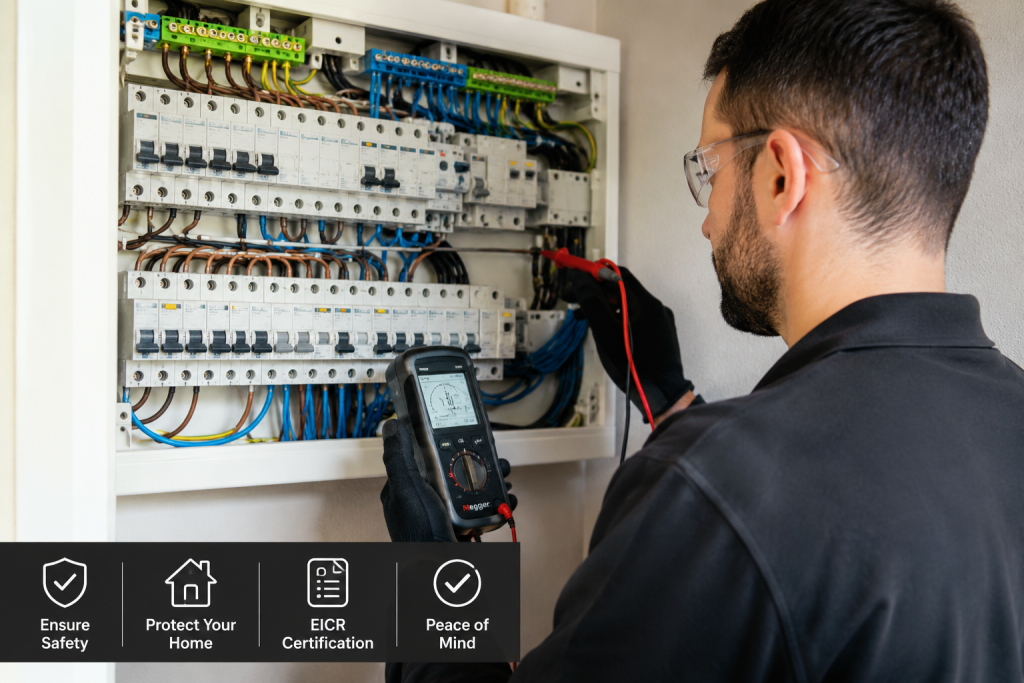
An Electrical Installation Condition Report (EICR) is a comprehensive inspection and test of your property’s fixed electrical installation. During the inspection, a qualified electrician assesses the condition of wiring, sockets, switches, consumer units, and other electrical components to ensure they meet current safety standards.
The report highlights any defects, deterioration, or potential hazards and recommends any necessary remedial work.
1. Your Property Is More Than 10 Years Old
If you’re wondering, “Do I Need an EICR for My Home?”, the age of your property is often one of the biggest factors to consider.
If your home hasn’t had an electrical inspection within the last 10 years, it’s worth arranging an EICR. Electrical standards have changed significantly over the years, and older properties may not meet current regulations.
Many homeowners are surprised to discover outdated wiring, insufficient circuit protection, or ageing consumer units that could affect safety.
2. You Still Have an Old Fuse Box
Homeowners with older fuse boards frequently ask, “Do I Need an EICR for My Home?” as outdated electrical systems may not meet current safety standards.Traditional fuse boxes are far less effective than modern consumer units fitted with Residual Current Devices (RCDs).
If your property still has:
- Rewireable fuses
- An old-style fuse board
- No RCD protection
an electrical inspection can determine whether an upgrade is required to improve safety and compliance.
3. Your Lights Flicker or Frequently Trip
Occasional flickering lights may seem harmless, but recurring electrical issues can indicate underlying faults such as:
- Loose connections
- Overloaded circuits
- Faulty wiring
- Deteriorating electrical components
An EICR can help identify the root cause before it develops into a more serious problem.
4. You’ve Recently Purchased a Property
Buying a home is one of the biggest investments you’ll ever make. While surveys assess the structure of a property, they often don’t provide a detailed assessment of the electrical installation.
Arranging an EICR after moving into a new home can provide peace of mind and help you understand whether any upgrades or repairs are needed.
5. You’re Planning Renovations or Extensions
Adding a new kitchen, home office, extension, EV charger, or garden building can place additional demand on your electrical system.
Before starting major works, an EICR can determine whether your existing installation is capable of safely supporting the additional load.
6. You Notice Burning Smells or Discoloured Sockets
Electrical burning smells, scorch marks, buzzing sounds, or discoloured sockets should never be ignored.
These warning signs may indicate:
- Overheating wiring
- Loose electrical connections
- Damaged accessories
- Circuit overloads
If you notice any of these issues, contact a qualified electrician immediately.
7. You’re Unsure of the Condition of Your Electrical Installation
Many homeowners simply don’t know when their property was last inspected. If you have no record of previous testing or electrical upgrades, arranging an EICR is a sensible way to establish the condition of your installation.
If you have no record of previous testing or electrical upgrades, arranging an EICR is a sensible way to establish the condition of your installation. A professional inspection can identify issues before they lead to unexpected breakdowns, costly repairs, or safety concerns. Our Domestic Electricians provide professional electrical inspections, testing and remedial work for homeowners across Surrey, Hampshire and Berkshire.
How Often Should a Home Have an EICR?
One of the most common questions we hear is, “Do I Need an EICR for My Home if everything seems to be working normally?” The answer is yes, because many electrical faults remain hidden until they are discovered during professional testing.
As a general guide, homeowners should consider an EICR every 10 years or when buying a property. However, more frequent inspections may be recommended for older properties or homes with significant electrical alterations.
A qualified electrician can advise on the most appropriate inspection interval for your property.
So, do I need an EICR for my home?
If your property is more than 10 years old, you’ve recently purchased it, or you’re unsure when it was last inspected, arranging an EICR is a sensible step towards protecting your home and family.
Regular electrical inspections can help identify hidden faults and improve household safety. See electrical safety guidance.
Why Choose LS Electrical?
At LS Electrical, we provide professional electrical inspections, testing, installations, and repairs for homeowners across Surrey, Hampshire, and Berkshire.
Our experienced team can carry out thorough EICRs, explain any findings clearly, and provide practical recommendations to keep your home safe and compliant.
Learn more about our Domestic Electrical Services here:
https://www.lselectrical.co.uk/trusted-domestic-electricians/
Book Your Electrical Safety Check Today
If you’re concerned about the condition of your home’s electrical installation or it’s been several years since your last inspection, an EICR can provide valuable peace of mind.
Contact LS Electrical today to arrange a professional electrical safety check and ensure your home’s electrical system remains safe, reliable, and fit for modern living.