Commercial Power Cuts: Prevention & Electrical Safety
An unexpected power cut can disrupt business operations, affecting everything from computers and communications to machinery, lighting and security systems. While some outages originate from the wider electricity network, others are caused by faults within a building’s electrical installation.
At LS Electrical, we help businesses across Hampshire, Surrey and Berkshire reduce the risk of avoidable electrical interruptions through inspections, planned maintenance, fault investigation and electrical upgrades.
Understanding what causes power cuts, how to respond safely and how to prevent electrical failures can help minimise disruption and protect your business.

What Causes Power Cuts in Commercial Buildings?
Power interruptions generally fall into two categories:
1) External electricity network failures may result from severe weather, damaged cables, substation faults or planned maintenance. These are normally the responsibility of your local electricity distribution network operator.
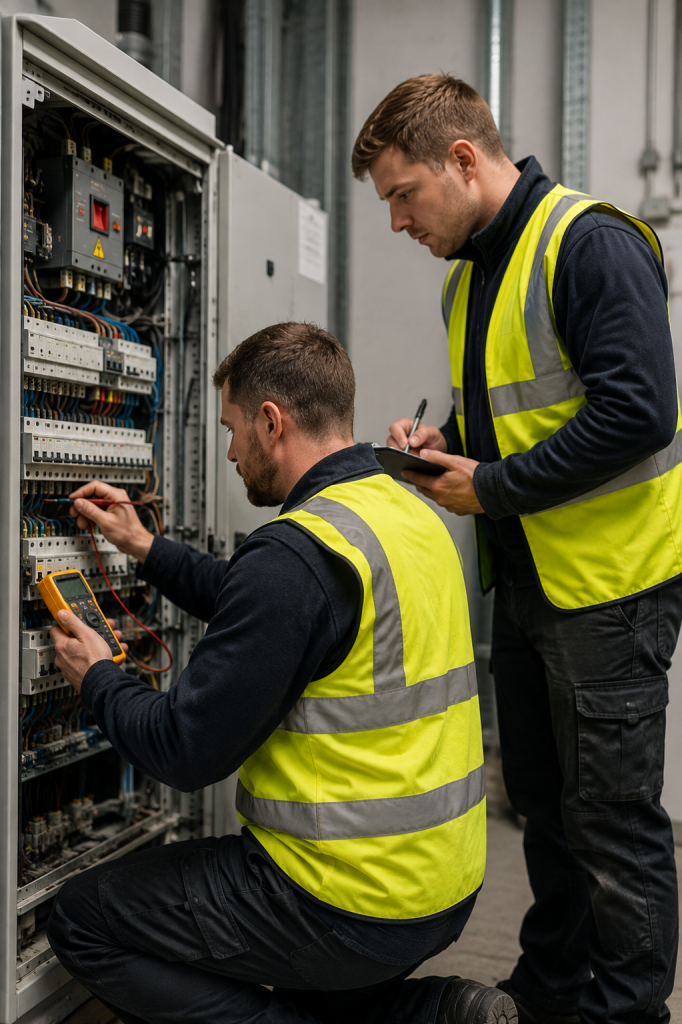
2) Internal electrical faults can be caused by overloaded circuits, deteriorating wiring, faulty equipment, damaged distribution boards or protective devices operating in response to an electrical fault.
If neighbouring businesses still have electricity but your premises do not, the issue may be within your building or its individual incoming supply.
Repeated power interruptions or circuit tripping should be investigated rather than treated as a normal occurrence.
What Should Your Business Do During a Power Cut?
If your business unexpectedly loses electricity, follow these steps:
- Check the extent of the outage. Establish whether the problem affects your entire building, individual circuits or neighbouring properties.
- Prioritise safety. Check employees and visitors are safe, particularly around machinery, restricted areas and poorly lit spaces. Follow your emergency procedures.
- Secure machinery and equipment. Follow established shutdown procedures and avoid restarting equipment until it is safe.
- Check electrical distribution equipment only if safe. Authorised, competent personnel may check for operated protective devices. Never remove covers, access exposed electrical components or repeatedly reset tripping breakers.
- Report external power cuts. Call 105 to contact your local electricity network operator in Great Britain.
- Check before restarting operations. When power returns, inspect equipment for unusual behaviour or signs of damage and follow the manufacturer’s restart procedures.
How Can Businesses Reduce Electrical Downtime?
Although businesses cannot prevent electricity network outages, proactive electrical maintenance can reduce the likelihood of failures originating within their own premises.
Planned Preventative Electrical Maintenance
Regular inspections and maintenance can identify deteriorating equipment, overheating connections and developing electrical faults before they result in unexpected interruptions.
A structured maintenance programme can be particularly valuable for businesses relying on machinery, IT infrastructure, refrigeration and other essential electrical equipment.
Commercial EICRs and Fixed Wire Testing
A Commercial Electrical Installation Condition Report (EICR) assesses the condition of the fixed electrical installation and identifies defects requiring attention.
Although an EICR cannot guarantee against future electrical failures, addressing identified problems can help improve electrical safety and reliability.
Distribution Boards and Electrical Capacity
Additional machinery, air conditioning and other equipment can increase demand on existing circuits.
Electrical load assessments and suitable distribution board upgrades can help ensure an installation remains appropriate for the business’s operational requirements.
Protecting Business Equipment During Power Interruptions
Power cuts can affect sensitive IT equipment, manufacturing machinery, security systems and other essential operations.
Some businesses use Uninterruptible Power Supplies (UPS) to provide temporary power to selected critical equipment, allowing systems to continue operating briefly or shut down safely.
For premises with three-phase machinery, an outage or phase-related fault may require additional checks before equipment is restarted.
Backup power arrangements should always be designed around the electrical loads and operational requirements of the premises.

When Should You Contact a Commercial Electrician?
Professional electrical investigation may be necessary if your business experiences:
Identifying and addressing underlying electrical faults can help reduce the likelihood of further interruptions.
- Repeatedly tripping circuit breakers or RCDs.
- Power failures affecting only part of your premises.
- Machinery or equipment unexpectedly losing electricity.
- Signs of overheating or deterioration around electrical equipment.
- Electrical problems following the installation of additional machinery.
Concerns about the condition or capacity of distribution boards.
Frequently Asked Questions About Commercial Power Cuts
What should a business do during a power cut?
Ensure employees and visitors are safe, establish whether the outage affects neighbouring properties and follow your business’s shutdown procedures. For external electricity network failures, call 105. Suspected internal electrical faults should be assessed by a competent electrician.
Why does the electricity keep tripping in my office?
Repeated tripping may be caused by overloaded circuits, faulty appliances, damaged wiring, earth leakage or other electrical faults. Protective devices should not be repeatedly reset without identifying the cause.
How can businesses prevent electrical power failures?
Although external network outages cannot be prevented by an electrician, planned maintenance, electrical inspections, load assessments and prompt investigation of recurring faults can reduce avoidable interruptions within commercial premises.
Can a commercial EICR help prevent power cuts?
An EICR can identify deterioration, damage and other defects within the fixed electrical installation. Addressing these issues may reduce the risk of certain electrical failures, although no inspection can guarantee uninterrupted electricity.
What should I do if only part of my commercial building loses power?
The issue may involve an individual circuit, distribution board, connected equipment or part of the incoming supply. Avoid repeatedly resetting protective devices and arrange professional investigation if the cause is unclear.
Can a power cut damage three-phase machinery?
Power interruptions, phase loss and voltage disturbances can affect three-phase machinery and associated control systems. Equipment should be checked and restarted according to manufacturer instructions and site safety procedures.