
Hidden Electrical Dangers in Your Home – halloween might be the season for ghosts and things that go bump in the night, but some of the scariest things in your home could be hiding behind your walls or inside your fuse box!
Faulty electrical wiring, outdated fuse boards and deteriorating connections can present serious safety risks, often without any obvious warning signs.
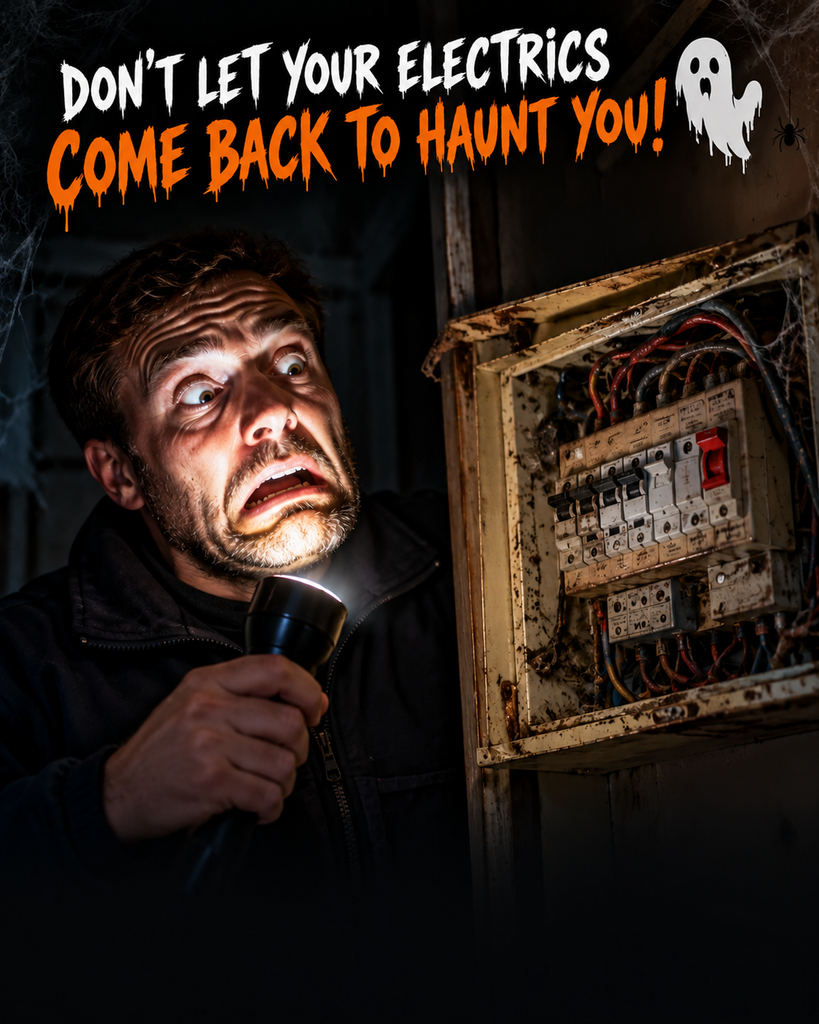
So, how do you know if your home’s electrics are safe?
5 Signs of Faulty Electrical Wiring in Your Home
Not all electrical problems are immediately visible, but there are warning signs you shouldn’t ignore:
- Flickering or dimming lights – Particularly if this happens frequently or when other appliances are switched on.
- Circuit breakers that keep tripping – Repeated tripping could indicate an electrical fault or overloaded circuit.
- Buzzing or crackling sockets – Unusual noises can indicate loose connections or electrical arcing.
- Burning smells or discoloured sockets – These could indicate overheating and require urgent attention.
- Old or outdated fuse boxes – Older consumer units may lack modern safety features, including RCD protection.
If you notice any of these warning signs, arrange for a qualified electrician to investigate. Burning smells, smoke or signs of overheating should be treated as urgent.
How Do I Know if My Fuse Box Needs Replacing?
An old fuse box doesn’t automatically mean your electrical installation is unsafe. However, older consumer units may not provide the same level of protection as modern installations.
If your fuse box has rewireable fuses, lacks RCD protection or shows signs of damage, it’s worth having it assessed.
Find out more about consumer unit and fuse box upgrades.
What Does an EICR Check in a House?
An Electrical Installation Condition Report (EICR) is a professional inspection and test of your property’s fixed electrical installation.
It can identify:
- Damaged or deteriorating electrical wiring
- Potential electric shock and fire hazards
- Defective electrical work
- Inadequate earthing and bonding
- Electrical installations that may require improvements
An EICR provides a clear assessment of your installation’s condition, helping you understand whether repairs or further investigation are necessary.
How Often Should You Have an Electrical Safety Inspection?
For owner-occupied homes, an electrical inspection is generally recommended at least every 10 years, or sooner if concerns arise.
In England, landlords must arrange electrical inspections for rented properties at least every 5 years, or sooner if the previous report requires it.
Commercial properties also require appropriate periodic inspection and testing, with intervals determined by the installation and its use.
Don’t Wait for an Electrical Nightmare!
Whether you’re concerned about ageing wiring, an outdated fuse box or simply want reassurance that your property’s electrics are safe, LS Electrical can help.
With over 30 years of electrical experience, our NICEIC Approved Contractor team provides domestic and commercial electrical inspections, testing and electrical installation services throughout Hampshire, Surrey and Berkshire.
Don’t let hidden electrical problems come back to haunt you!
Don’t Let Electrical Problems Haunt You!
Concerned about outdated wiring, an ageing fuse box or hidden electrical faults? Contact LS Electrical to discuss an electrical safety inspection or EICR for your property.
Contact LS Electrical →Frequently Asked Questions About Electrical Safety
Can faulty electrical wiring cause a house fire?
Yes. Damaged wiring, loose electrical connections and overloaded circuits can cause overheating or electrical arcing, potentially leading to a fire. An electrical inspection can help identify these hazards before they become serious.
How do I know if my house needs rewiring?
Common warning signs include frequent circuit breaker trips, damaged sockets, flickering lights and visibly deteriorating wiring. However, older wiring doesn’t automatically mean a property needs rewiring. A qualified electrician can assess its condition and recommend whether repairs or replacement are necessary.
Do I need an EICR when buying a house?
An Electrical Installation Condition Report (EICR) isn’t generally a legal requirement when buying a house in England, but arranging one can be worthwhile, particularly for older properties. It can identify electrical safety concerns and potential remedial costs before you commit to a purchase.