
Category: Domestic Electrical

  • Don’t Let Your Electrics Come Back to Haunt You! Hidden Electrical Dangers in Your Home

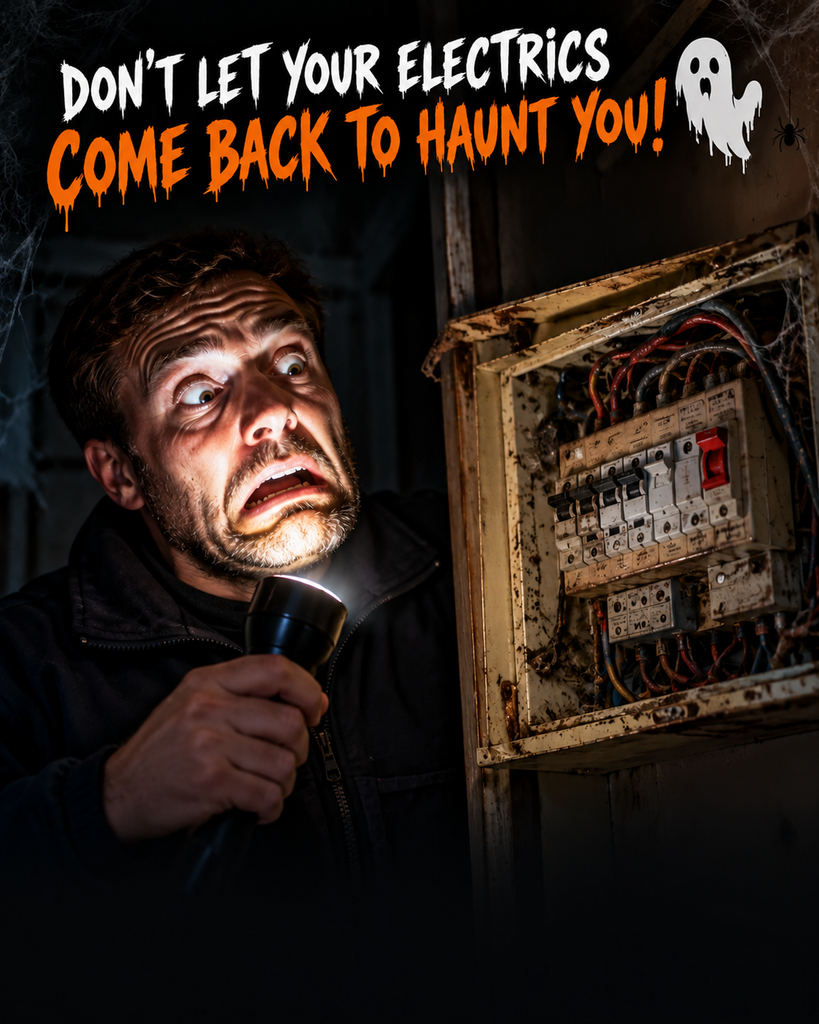
    Hidden Electrical Dangers in Your Home – halloween might be the season for ghosts and things that go bump in the night, but some of the scariest things in your home could be hiding behind your walls or inside your fuse box!

    Faulty electrical wiring, outdated fuse boards and deteriorating connections can present serious safety risks, often without any obvious warning signs.
    Hidden Electrical Dangers in Your Home

    So, how do you know if your home’s electrics are safe?

    5 Signs of Faulty Electrical Wiring in Your Home

    Not all electrical problems are immediately visible, but there are warning signs you shouldn’t ignore:

    1. Flickering or dimming lights – Particularly if this happens frequently or when other appliances are switched on.
    2. Circuit breakers that keep tripping – Repeated tripping could indicate an electrical fault or overloaded circuit.
    3. Buzzing or crackling sockets – Unusual noises can indicate loose connections or electrical arcing.
    4. Burning smells or discoloured sockets – These could indicate overheating and require urgent attention.
    5. Old or outdated fuse boxes – Older consumer units may lack modern safety features, including RCD protection.

    If you notice any of these warning signs, arrange for a qualified electrician to investigate. Burning smells, smoke or signs of overheating should be treated as urgent.

    How Do I Know if My Fuse Box Needs Replacing?

    An old fuse box doesn’t automatically mean your electrical installation is unsafe. However, older consumer units may not provide the same level of protection as modern installations.

    If your fuse box has rewireable fuses, lacks RCD protection or shows signs of damage, it’s worth having it assessed.

    Find out more about consumer unit and fuse box upgrades.

    What Does an EICR Check in a House?

    An Electrical Installation Condition Report (EICR) is a professional inspection and test of your property’s fixed electrical installation.

    It can identify:

    • Damaged or deteriorating electrical wiring
    • Potential electric shock and fire hazards
    • Defective electrical work
    • Inadequate earthing and bonding
    • Electrical installations that may require improvements

    An EICR provides a clear assessment of your installation’s condition, helping you understand whether repairs or further investigation are necessary.

    How Often Should You Have an Electrical Safety Inspection?

    For owner-occupied homes, an electrical inspection is generally recommended at least every 10 years, or sooner if concerns arise.

    In England, landlords must arrange electrical inspections for rented properties at least every 5 years, or sooner if the previous report requires it.

    Commercial properties also require appropriate periodic inspection and testing, with intervals determined by the installation and its use.

    Don’t Wait for an Electrical Nightmare!

    Whether you’re concerned about ageing wiring, an outdated fuse box or simply want reassurance that your property’s electrics are safe, LS Electrical can help.

    With over 30 years of electrical experience, our NICEIC Approved Contractor team provides domestic and commercial electrical inspections, testing and electrical installation services throughout Hampshire, Surrey and Berkshire.

    Don’t let hidden electrical problems come back to haunt you!

    Don’t Let Electrical Problems Haunt You!

    Concerned about outdated wiring, an ageing fuse box or hidden electrical faults? Contact LS Electrical to discuss an electrical safety inspection or EICR for your property.

    Contact LS Electrical →

    Frequently Asked Questions About Electrical Safety

    Can faulty electrical wiring cause a house fire?

    Yes. Damaged wiring, loose electrical connections and overloaded circuits can cause overheating or electrical arcing, potentially leading to a fire. An electrical inspection can help identify these hazards before they become serious.

    How do I know if my house needs rewiring?

    Common warning signs include frequent circuit breaker trips, damaged sockets, flickering lights and visibly deteriorating wiring. However, older wiring doesn’t automatically mean a property needs rewiring. A qualified electrician can assess its condition and recommend whether repairs or replacement are necessary.

    Do I need an EICR when buying a house?

    An Electrical Installation Condition Report (EICR) isn’t generally a legal requirement when buying a house in England, but arranging one can be worthwhile, particularly for older properties. It can identify electrical safety concerns and potential remedial costs before you commit to a purchase.
  • Halloween Electrical Safety: Avoid Overloading Sockets and Extension Leads

    Halloween Electrical Safety: Avoid Overloading Sockets and Extension Leads

    Halloween electrical safety is easy to overlook when you’re busy decorating your home with lights, illuminated pumpkins, projectors, inflatables and other powered decorations. Individually, many Halloween decorations use relatively little electricity, but plugging several into the same socket, multi-plug adaptor or extension lead can create unnecessary electrical risks.

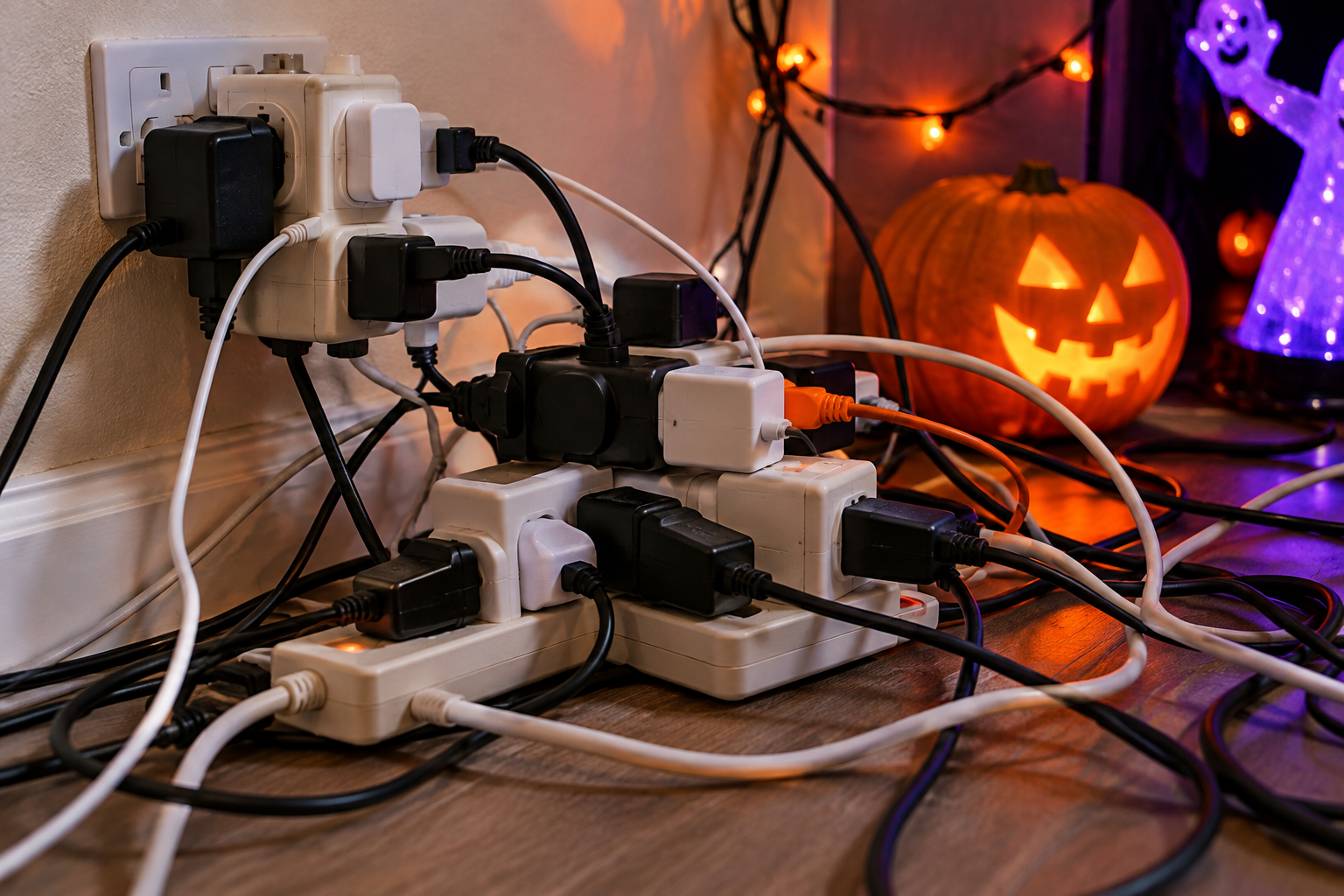
    Adding extra adaptors or extension leads doesn’t increase the amount of power available from a socket or circuit. That’s why it’s important to consider the combined electrical load, use extension leads correctly and recognise the warning signs of an overloaded socket.

    Here are some simple Halloween electrical safety tips to help you decorate your home without giving your electrics a fright.

    Halloween Electrical Safety

    Halloween Electrical Safety and Overloaded Sockets

    Can you overload a socket with Halloween decorations? Yes.

    Adding a multi-socket adaptor or extension lead gives you more places to plug things in, but it doesn’t increase the electrical capacity available. The important thing is the combined load of everything connected, rather than simply the number of available sockets.

    LED Halloween lights generally consume relatively little power, but you may also be using projectors, inflatables, speakers or other electrical equipment. Problems are more likely when Halloween decorations are added to an extension lead that’s already supplying everyday appliances.

    As part of your Halloween electrical safety checks, look at the rating of the extension lead or adaptor and the power requirements of everything connected to it.

    Is It Safe to Plug One Extension Lead Into Another?

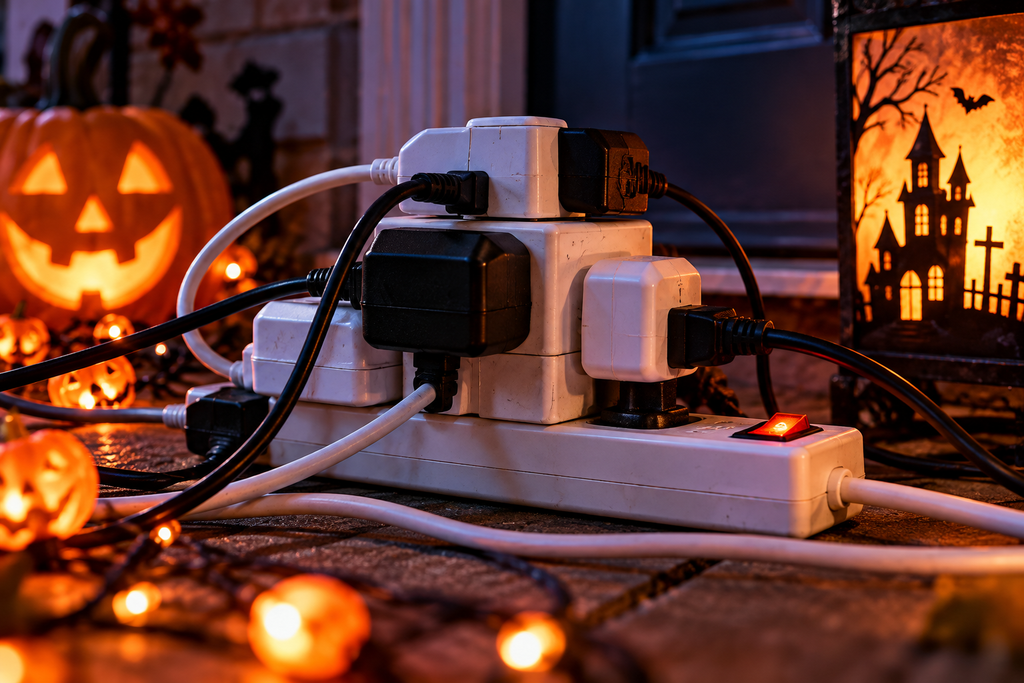
    Connecting one extension lead to another is often known as daisy-chaining, and it should be avoided.

    It can make it much easier to connect more electrical equipment than the original socket or extension lead was intended to supply.

    If you regularly find that you don’t have enough sockets, adding more and more extension leads isn’t a good permanent solution. Consider having additional properly installed sockets fitted instead.

    What Are the Signs of an Overloaded Socket or Extension Lead?

    Recognising the warning signs of an overloaded socket is another important part of Halloween electrical safety.

    Look out for:

    • A plug, socket or adaptor becoming unusually hot
    • Scorching or discolouration
    • A burning or hot-plastic smell
    • Buzzing or crackling sounds
    • Flickering lights
    • Damaged plugs, cables or sockets
    • Circuit breakers or RCDs repeatedly tripping

    If you notice burning, scorching, excessive heat or other signs of electrical damage, stop using the affected equipment and have the problem investigated.

    Repeated tripping shouldn’t simply be treated as an inconvenience. Protective devices are there to disconnect the electricity under certain fault conditions.

    Are Multi-Plug Adaptors Safe for Halloween Decorations?

    Multi-plug adaptors aren’t automatically unsafe, but they need to be used correctly and within their rated capacity.

    Don’t assume that every available socket on an adaptor needs to be filled. Check the manufacturer’s rating and consider the combined electrical load of everything you’re connecting.

    Avoid plugging high-powered household appliances into the same extension arrangement simply because there happens to be a spare outlet.

    Halloween Electrical Safety for Outdoor Decorations

    Halloween electrical safety is particularly important when decorations are being used outside.

    If your display extends into the garden, driveway or front of your home, make sure lights, extension leads and other electrical equipment are specifically suitable for outdoor use.

    Indoor extension leads, plugs and electrical decorations shouldn’t be exposed to rain or damp conditions.

    Check the manufacturer’s instructions and IP rating where applicable, keep electrical connections protected from water and make sure cables aren’t positioned where they could be damaged, crushed by doors or windows, or create a trip hazard.

    Check Halloween Decorations Before Plugging Them In

    Halloween decorations often spend most of the year packed away in lofts, garages or cupboards, so another useful Halloween electrical safety habit is checking them before they’re plugged in.

    Check that:

    • Cables haven’t been cut, crushed or damaged
    • Plugs and connectors aren’t cracked or loose
    • There are no exposed wires
    • Outdoor decorations are suitable for outdoor use
    • Extension leads are in good condition

    If an electrical decoration is damaged, replacing it is generally safer than attempting a makeshift repair.

    Don’t Turn Temporary Wiring Into a Permanent Solution

    Extension leads are useful for temporary requirements such as seasonal decorations. They shouldn’t become a substitute for having enough properly installed sockets.

    If your home regularly has extension leads running around rooms because there aren’t enough socket outlets, it may be worth considering having additional sockets installed.

    This can be particularly relevant in older properties where the electrical installation was designed long before today’s number of electrical devices became commonplace.

    When Should You Call an Electrician?

    Following sensible Halloween electrical safety precautions should be enough for most household displays, particularly when you’re using a few low-powered LED decorations with suitable equipment.

    However, you should consider professional advice if you notice damaged or overheating sockets, repeated tripping, burning smells, scorch marks or other electrical faults.

    You may also want to speak to an electrician if you’re continually relying on extension leads because your property doesn’t have enough sockets.

    LS Electrical provides domestic electrical services across Hampshire, Surrey and surrounding areas, including additional socket installation, electrical fault finding, consumer unit upgrades and electrical inspection and testing.

    The scariest thing this Halloween shouldn’t be your extension lead!

    Need an Electrician to Check Your Sockets or Circuits?

    If you have noticed overheating sockets, repeated tripping, burning smells, damaged wiring or signs of an overloaded circuit, it is worth having the issue checked properly rather than relying on additional adaptors or extension leads.

    LS Electrical provides domestic electrical services across Hampshire, Surrey and surrounding areas, including fault finding, additional socket installation, consumer unit upgrades and electrical inspection and testing.

    Contact LS Electrical