
Single-Phase vs Three-Phase – if you’re planning to expand your business, install new machinery or simply wondering whether your existing electrical supply is sufficient, you’ve probably come across the terms single-phase and three-phase power.
Understanding the difference between single-phase vs three-phase power for UK businesses can help you make informed decisions, avoid costly delays and ensure your premises are ready for future growth.
In this guide, we’ll explain how each type of electrical supply works, which businesses typically require three-phase power and when it may be worth considering an upgrade.
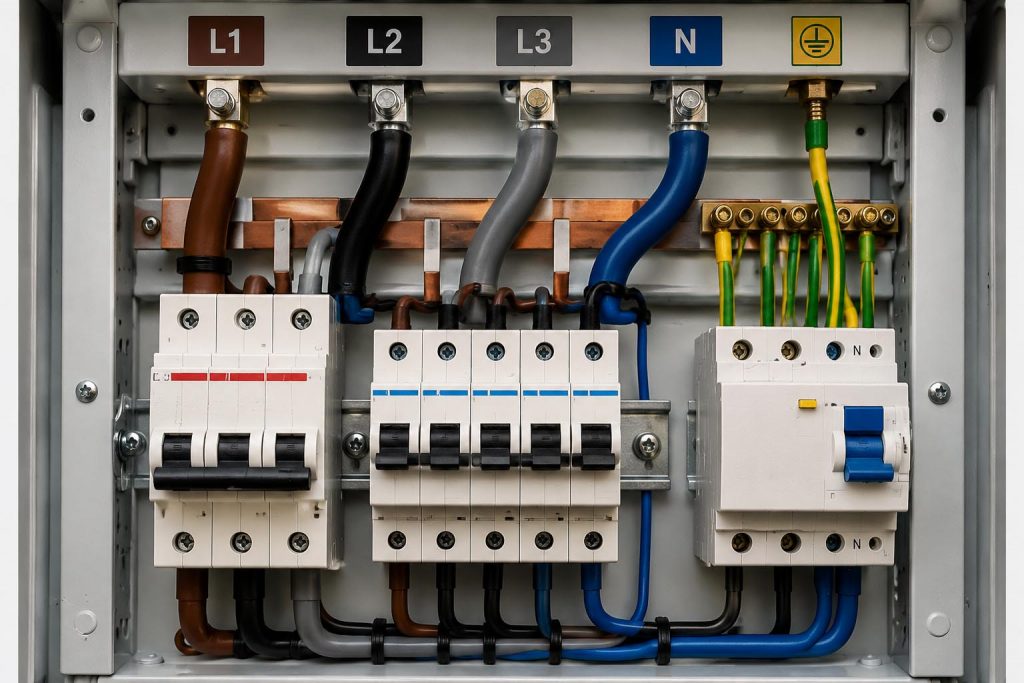
What Is Single-Phase Power?
Single-phase electricity is the standard electrical supply found in most UK homes and many smaller commercial premises.
It is perfectly suitable for typical electrical demands such as:
- Offices
- Retail shops
- Small cafés
- Beauty salons
- Small workshops
- General lighting
- Computers and office equipment
- Standard heating and air conditioning
For many businesses, a single-phase supply provides more than enough capacity for day-to-day operations.
What Is Three-Phase Power?
Three-phase electricity uses three alternating electrical currents instead of one, allowing power to be delivered more evenly and efficiently.
Rather than providing short bursts of power, a three-phase supply delivers a more consistent electrical load, making it ideal for equipment that requires higher power or continuous operation.
Businesses commonly using three-phase supplies include:
- Manufacturing facilities
- Engineering workshops
- Warehouses
- Distribution centres
- Vehicle repair garages
- Commercial kitchens
- Factories
- Agricultural buildings
- Larger office buildings
This is why many people search for “what businesses need three-phase power in the UK” when planning expansion.
Single-Phase vs Three-Phase Power: The Key Differences
| Single-Phase | Three-Phase |
|---|---|
| Standard for most homes | Common in commercial and industrial premises |
| Lower power capacity | Higher power capacity |
| Suitable for light electrical loads | Suitable for heavy machinery and equipment |
| Lower installation costs | Designed for larger electrical demands |
| Ideal for smaller premises | Better for expanding businesses |
Neither system is inherently “better”- the right choice depends entirely on your business’s electrical requirements.
How Do You Know If Your Business Needs Three-Phase Power?
Many businesses don’t think about their electrical supply until they encounter problems.
Some common signs include:
- Circuit breakers regularly tripping
- Lights dimming when machinery starts
- Installing commercial air conditioning
- Purchasing large machinery
- Adding EV charging points
- Expanding production facilities
- Increasing electrical demand year after year
If any of these sound familiar, you may be searching for “does my business need three-phase electricity?”– a question that’s best answered through a professional assessment of your electrical installation.
What Equipment Typically Requires Three-Phase Power?
Many commercial and industrial systems perform best with a three-phase supply, including:
- CNC machinery
- Industrial compressors
- Vehicle lifts
- Commercial refrigeration
- Large HVAC systems
- Commercial kitchen equipment
- Industrial pumps
- Production machinery
- Welding equipment
- Large extraction systems
Manufacturers often specify whether equipment requires a three-phase electrical supply before installation.
Can You Upgrade from Single-Phase to Three-Phase?
Yes. Many UK businesses successfully upgrade their electrical supply as they grow.
The process often includes:
- Assessing your current electrical installation
- Calculating your electrical load requirements
- Liaising with your Distribution Network Operator (DNO), where required
- Installing or upgrading distribution equipment
- Testing and certification
Every property is different, so the exact process will depend on your existing electrical infrastructure and the capacity available in your area.
Is Three-Phase Power More Efficient?
One of the main advantages of three-phase power is its ability to distribute electrical loads more evenly.
This can help:
- Improve the performance of large motors
- Reduce voltage fluctuations
- Support higher electrical demand
- Allow future expansion
- Improve reliability for commercial operations
While it doesn’t necessarily reduce your electricity bills on its own, it provides the infrastructure needed for businesses with greater power requirements.
Could Renewable Energy Change Your Electrical Requirements?
As more businesses look to reduce their energy costs and carbon footprint, many are investing in commercial solar PV systems, battery storage and workplace EV charging.
While smaller solar installations can often be connected to a single-phase supply, larger commercial solar systems are frequently installed on three-phase electrical supplies. Three-phase power can help distribute the generated electricity more evenly across your premises and is often better suited to businesses with higher energy demands.
If you’re planning renewable energy alongside an electrical upgrade, it’s worth considering both projects together. This can simplify the design process and help ensure your electrical infrastructure is ready for future expansion.
Related reading: Commercial Solar Panels for Businesses → https://www.ukgei.co.uk/commercial-installation-service

Future-Proofing Your Business
Many businesses only upgrade their electrical supply after encountering limitations.
However, if you’re already planning:
- A building extension
- New machinery
- Additional production lines
- Commercial EV chargers
- Larger HVAC systems
- Warehouse expansion
it’s worth considering whether your existing electrical supply will continue to meet your needs over the coming years.
Planning ahead can often reduce disruption and help avoid costly alterations later.
Learn More About Three-Phase Power Installations
If you’re considering a three-phase electrical installation for your business, or simply want to understand what’s involved, we’ve created a dedicated guide covering the installation process, typical applications and key considerations.
Frequently Asked Questions FAQs
What is the difference between single-phase and three-phase power?
LS Electrical Ltd – Single-phase power uses one alternating current and is commonly found in homes and smaller commercial premises. Three-phase power uses three alternating currents, allowing it to deliver higher and more consistent power for commercial and industrial applications. This makes it ideal for businesses operating machinery, large HVAC systems or higher electrical loads.
How do I know whether Single-Phase vs Three-Phase power is right for my business?
LS Electrical Ltd – The right choice depends on your electrical demand. If your business is installing heavy machinery, expanding production, adding commercial EV chargers or regularly experiencing overloaded circuits, a three-phase electrical supply may be the most suitable option. A qualified commercial electrician can assess your current and future requirements.
Can I upgrade from Single-Phase vs Three-Phase power?
LS Electrical Ltd – Yes. Many commercial and industrial premises can be upgraded from a single-phase to a three-phase electrical supply. The process will depend on your existing installation and may require coordination with your local Distribution Network Operator (DNO) before the electrical work can begin.
Is Single-Phase vs Three-Phase power only relevant for factories?
LS Electrical Ltd – No. While factories commonly use three-phase power, it is also found in warehouses, engineering workshops, vehicle repair garages, commercial kitchens, schools, healthcare facilities and larger office buildings. Any business with higher electrical demands may benefit from a three-phase supply.
Is Single-Phase vs Three-Phase power more expensive?
LS Electrical Ltd – A three-phase installation may involve higher initial installation costs, particularly if your existing supply needs upgrading. However, for businesses with significant electrical demands, it provides the capacity and reliability needed to support equipment safely and efficiently, making it a worthwhile long-term investment.