
Commercial Battery Storage & BS 7671 – Commercial battery storage is becoming increasingly common as businesses look to store solar energy, reduce peak electricity costs and make better use of lower-cost electricity tariffs.
This growth is reflected in the latest update to the IET Wiring Regulations (BS 7671).
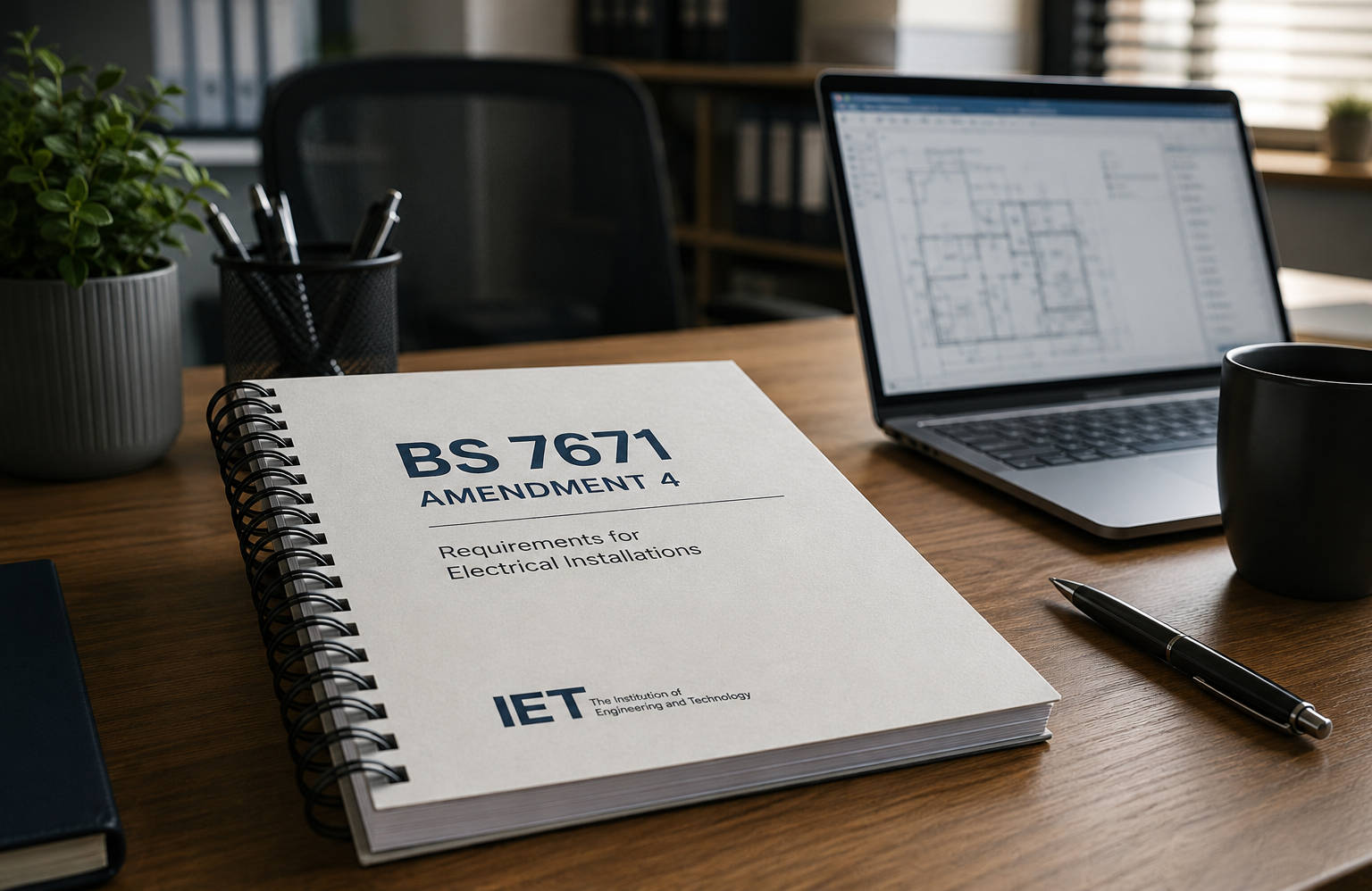
Published in April 2026, BS 7671:2018+A4:2026 – Amendment 4 to the 18th Edition Wiring Regulations introduces a new Chapter 57 covering stationary secondary batteries used for the storage and supply of electrical installations.
For commercial landlords, facilities managers and industrial businesses, the changes are particularly relevant when planning a new battery installation, altering an existing electrical installation or undertaking electrical inspection and testing.
What Is Chapter 57 of BS 7671?
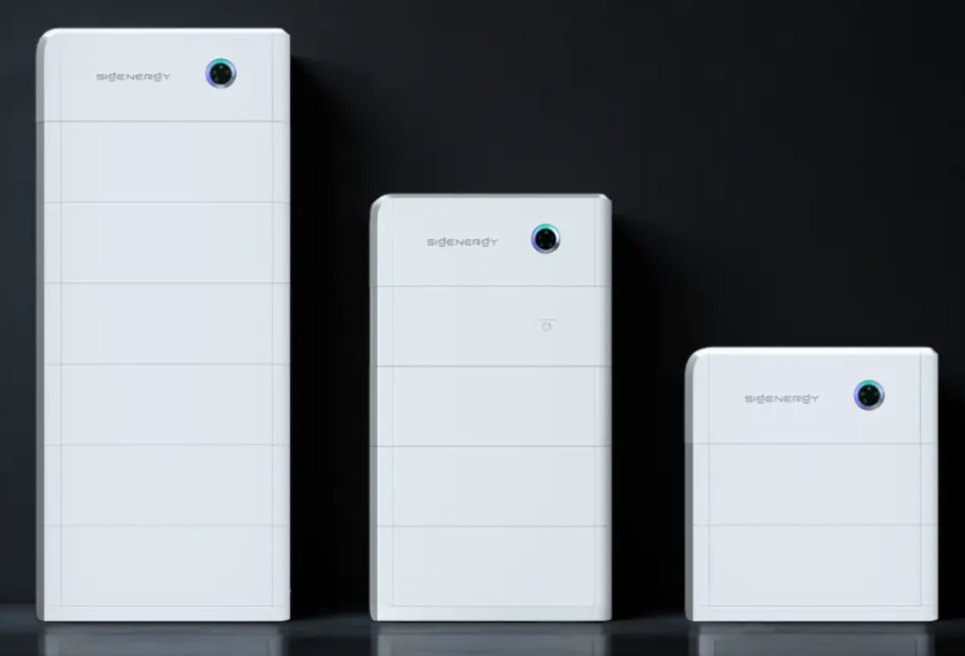
Chapter 57 reflects the increasing use of battery energy storage systems within electrical installations.
Unlike conventional electrical loads, battery systems can both receive electricity and supply it back into an installation. This means the electrical design needs to take account of bidirectional energy flow as well as the characteristics of the battery system itself.
The new requirements address areas including:
- battery system design and characteristics;
- power conversion equipment;
- bidirectional and hybrid inverters;
- suitability of electrical protective devices;
- battery location;
- ventilation; and
- fire-risk mitigation.
For relevant requirements within BS 7671, stationary batteries covered by Chapter 57 are considered as a generating set rather than simply an electrical load.
What Changes on 15 October 2026?
Amendment 4 was published on 15 April 2026 and can already be used.
There is, however, a six-month transition period.
The previous version of BS 7671 – BS 7671:2018+A2:2022+A3:2024 – is withdrawn on 15 October 2026, after which Amendment 4 becomes the current version.
This is particularly relevant for electrical inspection and testing. NICEIC has confirmed that Electrical Installation Condition Reports (EICRs) will need to be carried out against Amendment 4 from 15 October 2026.
Do Existing Battery Installations Need Upgrading?
Not automatically.
BS 7671 is not retrospective. An electrical installation that complied with an earlier edition of the Wiring Regulations does not automatically become unsafe or require upgrading simply because a newer edition has been published.
However, Amendment 4 becomes important when designing new installations, installing battery storage, making additions or alterations to an existing installation, or undertaking periodic inspection and testing.
For landlords and facilities managers with an existing battery system, particularly where documentation is limited or further electrical work is planned, this may be a sensible opportunity to review the wider electrical installation.
What Does Chapter 57 Mean for Commercial and Industrial Properties?
Battery storage needs to be considered as part of the complete electrical installation, rather than simply as a standalone piece of equipment.
For commercial and industrial properties, considerations may include:
- the condition and capacity of existing distribution equipment;
- electrical protection and isolation;
- cable capacity and electrical loading;
- earthing arrangements;
- existing onsite generation such as solar PV;
- battery location;
- appropriate ventilation and fire-risk mitigation; and
- how electricity will flow through the installation.
The appropriate requirements will depend on the battery technology, manufacturer’s instructions, system design and the building in which it is being installed.
This can be particularly important in older commercial or industrial premises where the electrical infrastructure was designed long before onsite generation and large-scale battery storage were envisaged.
Planning Commercial Battery Storage?
If your business is considering battery storage, assessing the existing electrical infrastructure early in the project can identify potential limitations before equipment is installed.
For example, alterations may be required to distribution equipment, electrical protection, isolation or other parts of the installation to accommodate the proposed system.
The same principle applies where businesses are planning several electrification projects together, such as solar PV, battery storage, workplace EV charging or additional electrical machinery.
Considering these requirements as part of an overall electrical strategy can help avoid unnecessary alterations later.
Combining Commercial Solar and Battery Storage
Battery storage is increasingly installed alongside commercial solar PV.
Electricity generated by solar panels during the day can be stored and used later, potentially increasing the amount of onsite renewable electricity a business can use itself.
For businesses considering commercial solar panels and battery storage, our associated renewable energy company, UK Green Energy Installations (UKGEI), provides specialist commercial renewable energy design and installation across Surrey, Hampshire and Berkshire.
Considering Commercial Solar & Battery Storage?
Our sister renewable energy company, UK Green Energy Installations (UKGEI), designs and installs commercial solar PV and battery storage solutions for businesses across Surrey, Hampshire and Berkshire.
Learn More About Commercial Solar & Battery Storage →
LS Electrical can support renewable energy projects where alterations, upgrades or other work to the commercial electrical infrastructure are required.
Commercial Electrical Inspections and Infrastructure Upgrades
At LS Electrical, we provide commercial and industrial electrical installation, testing, maintenance and infrastructure upgrades across Surrey, Hampshire and Berkshire.
With more than 30 years’ experience, we can assess existing commercial electrical installations and undertake electrical works required to support changing business requirements, including:
- commercial and industrial electrical installations;
- three-phase power and distribution;
- electrical alterations and upgrades;
- commercial EICRs;
- machinery and equipment supplies; and
- electrical infrastructure supporting renewable energy projects.
If you’re planning battery storage, expanding an existing electrical installation or want to establish whether your current infrastructure is suitable for future projects, contact LS Electrical to discuss your requirements.
Frequently Asked Questions
When does BS 7671 Amendment 4 come into effect?
BS 7671:2018+A4:2026 was published on 15 April 2026 and can already be used. The previous version of BS 7671 is withdrawn on 15 October 2026, after which Amendment 4 becomes the current version.
Do existing commercial battery installations need to comply with Amendment 4?
Existing installations do not automatically require upgrading simply because Amendment 4 has been introduced. BS 7671 is not retrospective. However, the current requirements become relevant when new work, additions, alterations or periodic electrical inspection and testing are undertaken.
Does Chapter 57 apply to commercial battery storage?
Chapter 57 covers stationary secondary battery installations where their designed purpose is the storage and supply of electrical installations. There are exclusions for certain batteries incorporated into products or systems covered by appropriate product standards.
Further Information
For authoritative information about Amendment 4 and the latest edition of BS 7671, visit the Institution of Engineering and Technology (IET):
BS 7671 – 18th Edition IET Wiring Regulations
This article provides general information about BS 7671:2018+A4:2026. Requirements vary according to the individual electrical installation, equipment and circumstances, and the information above should not be treated as a substitute for project-specific electrical design or professional advice.